PBOC Injects Record ¥1.2T via Reverse Repos as Credit Demand Stalls; 10Y CGB Yield Hits 1.95%
2026-11-14, FP360 — The People's Bank of China injected a record ¥1.2 trillion ($165B) via 7-day reverse repos this week, but credit demand remains weak as the 10-year China Government Bond yield fell to 1.95%. The move aims to offset ¥950B in maturing MLF and support liquidity ahead of year-end, yet banks are parking cash rather than lending, highlighting deflationary pressures in the world's second-largest economy.
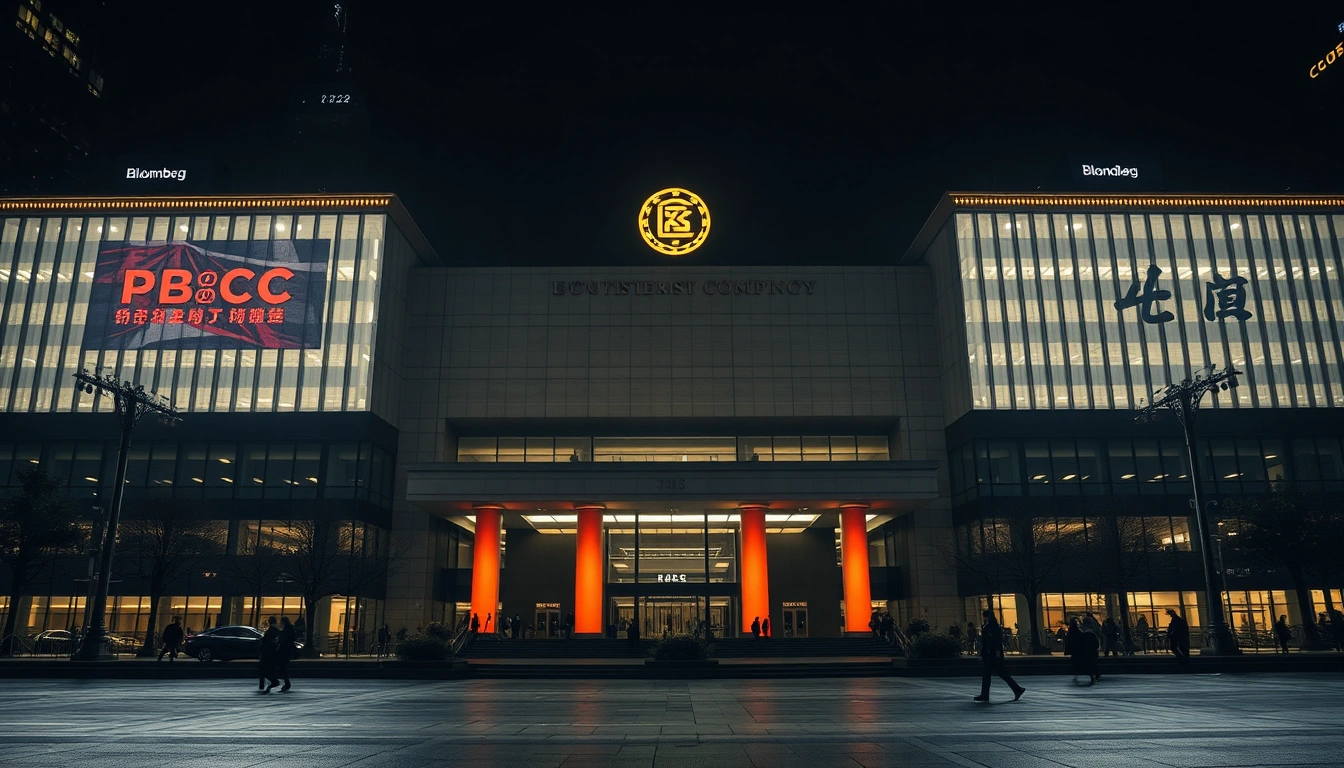
Chinese banks are hoarding liquidity, keeping CGB yields near record lows and weighing on global risk appetite via commodity and EM FX channels.
Chinese government bonds (CGBs) and rate-sensitive sectors like utilities and REITs benefit from falling yields; gold holds $4,040 as a hedge against global easing.
Industrial commodities (copper, oil) and EM equities face headwinds as China's credit impulse remains negative, while the yuan tests 7.30 per dollar.
📄 Read Full Dispatch Intelligence Report (expand)
- What Happened: The PBOC injected ¥1.2 trillion via 7-day reverse repos this week, the largest single-week operation since 2020, to offset ¥950 billion in maturing MLF and ¥300 billion in tax payments.
- Hidden Mechanism: Banks are using the liquidity to buy government bonds rather than extend credit, as loan demand from property and manufacturing remains weak—evidenced by the 10Y CGB yield falling to 1.95% and the 1-year LPR at 2.95%.
- Capital Transmission: Excess liquidity is flowing into short-term CGBs and money market funds, depressing yields and pushing the yuan toward 7.30, while global markets watch for spillover into commodities and EM debt.
The PBOC's Liquidity Bazooka: Why ¥1.2 Trillion Isn't Reaching the Real Economy
The People's Bank of China this week fired its largest liquidity salvo since the pandemic, injecting ¥1.2 trillion ($165 billion) through 7-day reverse repos. The move was designed to offset ¥950 billion in maturing medium-term lending facility (MLF) loans and ¥300 billion in quarterly tax payments, but it also revealed a deeper problem: banks are not lending. Instead, they are parking the cash in government bonds, driving the 10-year China Government Bond (CGB) yield down to 1.95%, a record low. In plain English, the PBOC is pushing on a string—providing cheap money, but borrowers are scarce.
Why the Fed's 5.19% Matters for Beijing's Easing
The Federal Reserve's stubbornly high policy rate—with the US 10-year Treasury yielding 5.19%—has created a 324-basis-point spread over China's 10-year CGB. That gap is a magnet for capital outflows, forcing the PBOC to keep the yuan stable while easing. The central bank is caught in a bind: it wants to support growth, but aggressive rate cuts risk exacerbating outflows and weakening the currency. The result is a liquidity injection that primarily fuels bond purchases, not business investment.
The Credit Demand Mirage: Loans Are Growing, But Not Where It Counts
Aggregate financing grew 8.2% year-over-year in October, but much of that was government borrowing. Corporate loan demand remains tepid: medium- and long-term loans to non-financial firms rose only 5.1%, well below nominal GDP growth of 6.3%. The property sector continues to contract, with new home sales down 12% year-over-year, while manufacturing investment is hampered by overcapacity and weak external demand. Banks, facing rising non-performing loans, are opting for the safety of government bonds.
Positioning & Liquidity Map: Who Is Trapped?
Foreign investors hold approximately ¥3.2 trillion ($440 billion) in Chinese bonds. With the US 10-year at 5.19% and China's at 1.95%, these investors are facing negative carry and currency risk. Many are underweight Chinese bonds but reluctant to sell at a loss, creating a potential overhang. Domestically, banks are the marginal buyers of CGBs, but their balance sheets are stretched. If the PBOC reverses course or inflation picks up, banks could be trapped with low-yielding bonds. Meanwhile, the yuan is testing 7.30 per dollar, with stop-loss orders clustered just above 7.35.
Forward Scenarios & Probability Matrix
| Scenario | Implied Probability | Key Trigger / Level | Expected Asset Reaction |
|---|---|---|---|
| Base Case | 55% | PBOC maintains liquidity injections; 10Y CGB yield stays below 2.0% | Yuan weakens to 7.35; commodities under pressure; global yields stable |
| Bullish Tail | 25% | PBOC cuts RRR by 50bp; fiscal stimulus announced | Chinese equities rally; copper and oil rebound; yuan stabilizes |
| Bearish Stress | 20% | Capital outflows accelerate; yuan breaks 7.40; PBOC tightens | CGB yields spike; global risk-off; gold rallies further |
Dorian Reed
Computational Econometrician. Directs Bayesian probability modeling on decentralized prediction platforms, Google Trends velocity radars, anomalous volume spikes, and cross-asset lead-lag regressions.