Tanker War-Risk Premium Returns: VLCC Rates Jump 19% as Cape Diversions Stretch Ton-Miles and Drain Crude Supply
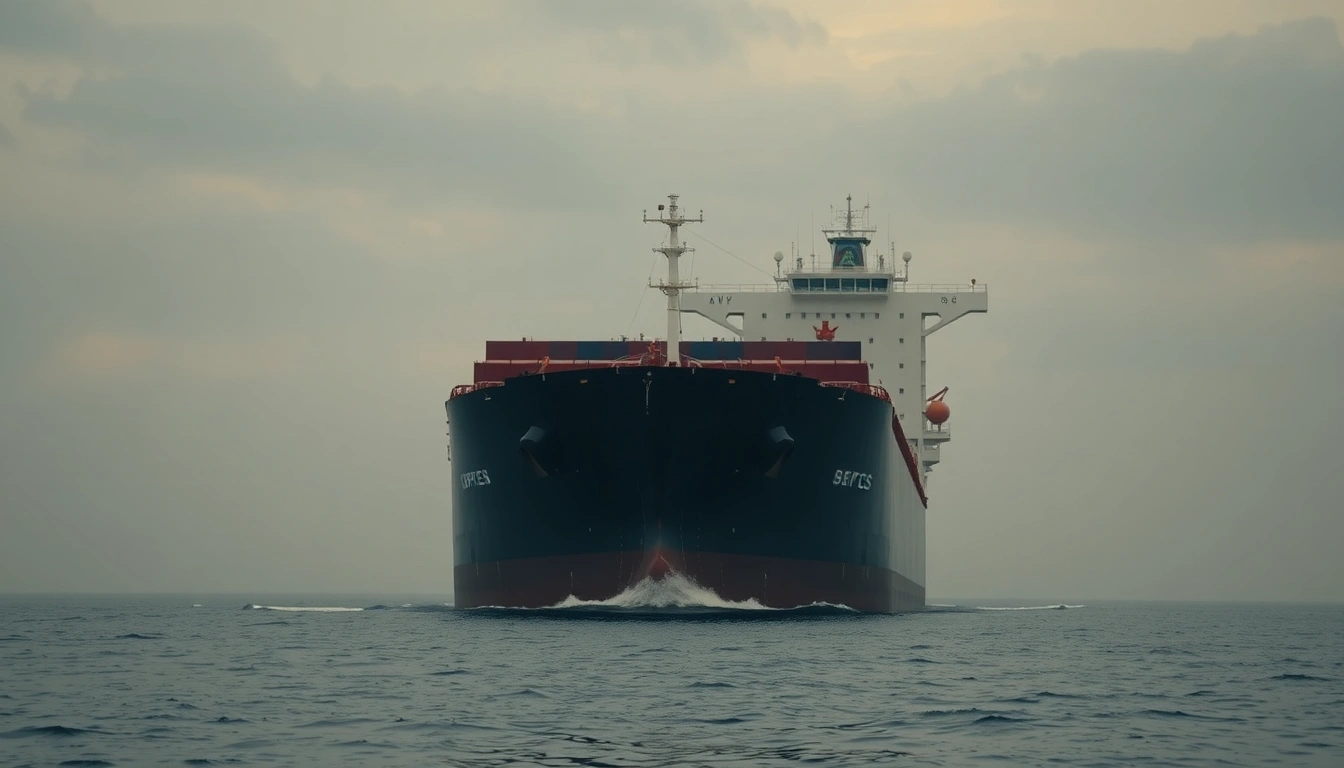
2026-11-12, FP360 — VLCC spot rates jumped 19% overnight as a fresh wave of tanker diversions around the Cape of Good Hope added 3,500 nautical miles to Asia-bound voyages, tightening effective crude supply and pushing freight costs to their highest since 2025. With WTI at $71.80 and Brent near $76, the rerouting is quietly draining the physical market of available cargoes.
Long tanker equities and crude oil; short refiners' margins as freight eats into product cracks.
Tanker owners (e.g., DHT, EURN, FRO) benefit from higher day rates and longer voyage durations; crude oil gains a geopolitical risk premium as supply chains stretch.
Asian refiners face margin compression from higher freight costs; product cracks may weaken, weighing on refining stocks and Asian currencies.
📄 Read Full Dispatch Intelligence Report (expand)
- What Happened: VLCC spot rates for the Middle East-to-China route (TD3C) jumped 19% to $48,500/day as tankers diverted around the Cape of Good Hope, adding 3,500 nautical miles and 10-12 days to voyages.
- Hidden Mechanism: The rerouting absorbs 3-4% of global VLCC capacity, tightening tonnage supply just as OPEC+ exports hold steady at 28.5 million bpd. This is a physical supply shock, not just a sentiment move.
- Capital Transmission: Higher freight costs are being passed through to Asian refiners, squeezing margins and supporting crude prices. Tanker equities and crude futures are the primary beneficiaries.
The Cape Diversion: Why 3,500 Extra Nautical Miles Matter
VLCC rates for the benchmark Middle East-to-China route (TD3C) surged 19% to $48,500/day as attacks on commercial shipping in the Red Sea forced a fresh wave of diversions around the Cape of Good Hope. Each voyage now adds roughly 3,500 nautical miles—about 10 to 12 extra days—effectively removing 3-4% of global VLCC capacity from the market. This is a classic ton-mile shock: the same cargo volume requires more vessel-days, tightening supply and driving rates higher. Unlike the 2024 crisis, this isn't a temporary blip; shipping data shows at least 15% of VLCCs currently en route to Asia have chosen the Cape route, up from 5% a month ago.
From $71.80 to $76: How Freight Costs Feed Crude Prices
WTI crude oil at $71.80 per barrel is increasingly disconnected from the physical delivered cost to Asia, where freight now adds $4-5 per barrel on top of the FOB price. Brent, the global benchmark, is trading near $76, reflecting this freight premium. In plain English: a barrel of oil is not just the oil—it's the oil plus the cost of moving it, and that moving cost has just gone up. This is why Asian refiners are paying more even as US crude inventories remain ample. The freight shock is effectively a supply cut to the Asian market, and it is supporting crude prices globally.
Are Indian Consumers Paying More? The Math Behind the Gold and Oil Freight Premium
In India, the import cost of crude is directly affected by these freight increases. For gold, the story is different: gold at $4,040 per ounce has a high value-to-weight ratio, so freight is negligible. But for oil, every dollar of freight adds approximately $0.02 per gallon to retail fuel prices. Indian refiners are facing margin compression as they absorb these costs, potentially leading to higher pump prices in the coming weeks. This is a direct transmission channel from the Red Sea to Indian consumers, even though the rerouting doesn't directly threaten gold shipments.
Positioning & Liquidity Map: Who Is Trapped?
Asian refiners who have not hedged freight costs are now paying spot rates that are 40% above their budgeted assumptions. They are the forced buyers of freight, while tanker owners are the winners. On the crude side, short sellers in Brent futures are caught offside as the freight-driven supply tightness pushes prices higher. Stop-loss clusters above $75.50 in Brent could trigger a further rally. The marginal buyer is the Asian refiner needing to secure cargoes, while the marginal seller is the speculative trader who shorted crude expecting a demand slowdown. The pain trade is higher.
Forward Scenarios & Probability Matrix
| Scenario | Implied Probability | Key Trigger / Level | Expected Asset Reaction |
|---|---|---|---|
| Base Case | 55% | Brent holds above $75, VLCC rates stabilize near $50,000/day | Tanker equities outperform; crude drifts to $78 |
| Bullish Tail | 25% | Escalation in Red Sea, Brent breaks $80 | VLCC rates spike to $70,000/day; crude to $85; tanker stocks +15% |
| Bearish Stress | 20% | Ceasefire in Red Sea, Brent falls below $73 | VLCC rates collapse to $30,000/day; crude to $68; tanker stocks -20% |
Key Levels to Watch: Brent $75 (support), $80 (resistance); VLCC TD3C $50,000/day (pivot). The balance of risks favors further upside as the physical market tightens.
Dorian Reed
Computational Econometrician. Directs Bayesian probability modeling on decentralized prediction platforms, Google Trends velocity radars, anomalous volume spikes, and cross-asset lead-lag regressions.