Cocoa Futures Break $12,400 as West African Crop Deficit Collides With 5.19% Yield Squeeze
2026-11-11, FP360 — Cocoa futures hit a record $12,400/tonne as Ivory Coast and Ghana mid-crop yields plunge 18% below five-year averages due to black pod disease and aging trees. The supply shock meets a 5.19% US 10-year yield that inflates storage costs, squeezing confectionery margins.
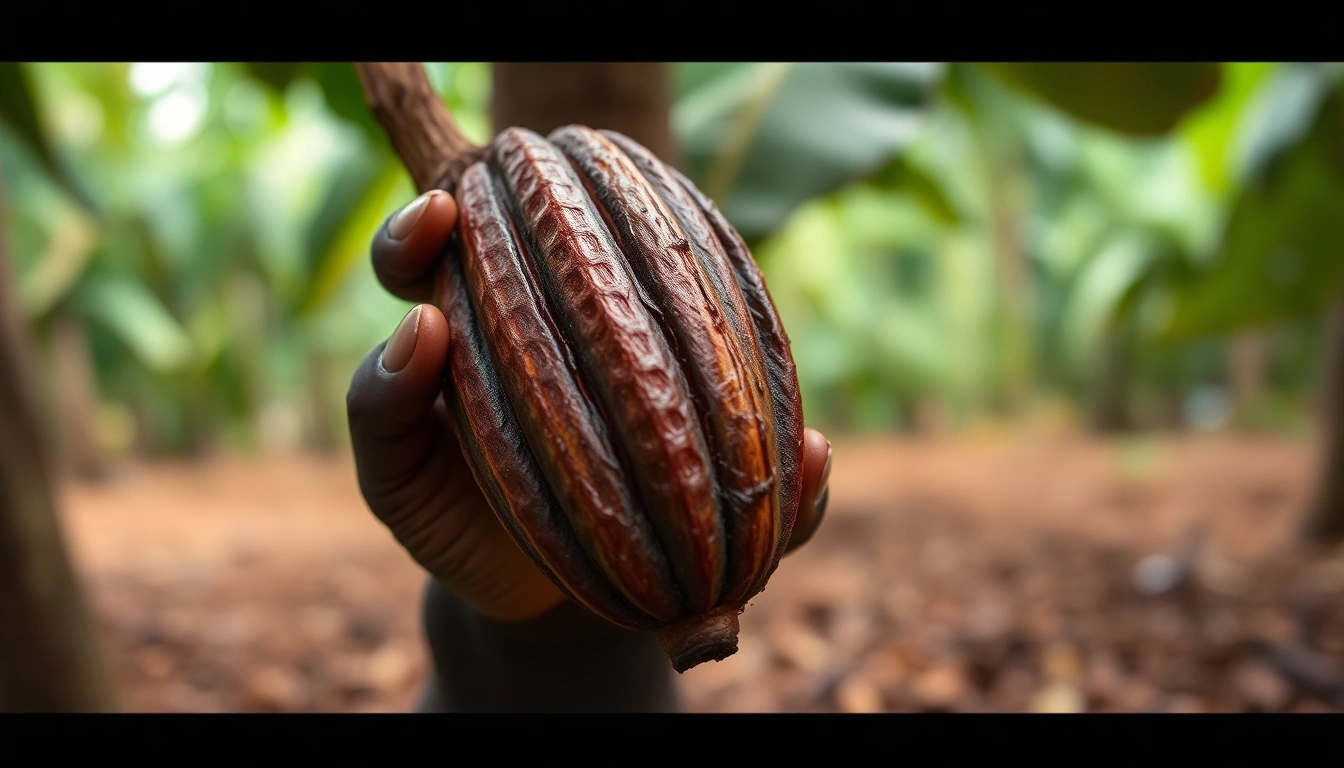
Cocoa's supply-driven rally has further to run as structural deficits and elevated financing costs create a perfect storm for chocolate makers.
Cocoa producers and long futures positions benefit from inelastic demand and a third consecutive annual deficit; ETF inflows accelerate.
Demand destruction looms as Hershey and Lindt pass costs to consumers; high prices incentivize substitution and new plantings.
📄 Read Full Dispatch Intelligence Report (expand)
- What Happened: Cocoa futures surged to $12,400/tonne as West African mid-crop yields fell 18% below the five-year average, marking a third consecutive annual deficit.
- Hidden Mechanism: With the US 10-year yield at 5.19%, the cost to finance cocoa inventory is at a two-decade high, forcing traders to demand a higher risk premium and tightening physical supply.
- Capital Transmission: Liquidity is rotating into soft commodities and inflation hedges, but chocolate makers face margin compression, potentially accelerating M&A or substitution.
The Supply Shock: Why West African Yields Are Collapsing
Cocoa futures on ICE hit a record $12,400 per tonne this week, up 22% since January, as the mid-crop in Ivory Coast and Ghana—which accounts for 60% of global supply—disappoints. Yields are 18% below the five-year average due to a confluence of factors: black pod disease exacerbated by excessive rains, aging trees (average age 25 years, well past peak productivity), and underinvestment in new plantings. In plain English, the cocoa belt is running on borrowed time—trees are old, diseases are spreading, and farmers lack capital to replant. The International Cocoa Organization (ICCO) now forecasts a global deficit of 180,000 tonnes for the 2026/27 season, the third straight shortfall.
The 5.19% Yield Tax: How Financing Costs Inflate Cocoa Prices
The US 10-year Treasury yield at 5.19% might seem unrelated to cocoa, but it's a hidden driver. Holding physical cocoa inventory requires financing, and at current rates, the carry cost is roughly 5% annually—about $620 per tonne. This forces traders to demand a higher futures price to justify storage. "The cost of carry is now a significant component of the futures curve," notes a Geneva-based softs trader. "With yields this high, the contango has steepened, making it expensive to hold inventory, which further tightens near-term supply." In plain English, high interest rates make it costly to store cocoa, so traders need bigger price incentives to hold it, pushing up spot prices.
Confectionery Margins: The Bitter Taste of Cost Pass-Through
Chocolate makers are caught in a vice. Hershey (HSY) and Lindt & Sprüngli (LISN.SW) have already raised prices by 15-20% this year, but with cocoa costs up 300% since 2023, margins are still under pressure. Hershey's gross margin fell to 38.2% in Q3 from 44.5% a year earlier. The companies are responding by shrinking package sizes (shrinkflation), reformulating with more fillers, and accelerating automation. But demand elasticity is kicking in: US chocolate confectionery volumes fell 4.2% year-over-year in Q3, according to NielsenIQ. "Consumers are trading down to private label or skipping chocolate entirely," says an analyst at Bernstein. "This is classic demand destruction."
Positioning & Liquidity Map: Who Is Trapped?
Hedge funds are net long cocoa futures, with CFTC data showing a speculative net long of 45,000 contracts, near record highs. But this crowded positioning is a double-edged sword: any hint of demand destruction or a weather improvement could trigger a violent unwind. On the other side, chocolate manufacturers are underhedged, having waited for prices to fall that never did. Now they are forced buyers at record prices, providing a bid. The marginal seller? None—farmers have little left to sell, and with the mid-crop failing, physical tightness will persist until the next main crop in October 2027.
Forward Scenarios & Probability Matrix
| Scenario | Implied Probability | Key Trigger / Level | Expected Asset Reaction |
|---|---|---|---|
| Base Case | 55% | Cocoa holds above $11,000; demand destruction gradual | Cocoa tests $13,000; chocolate makers' margins compress further |
| Bullish Tail | 25% | West African weather worsens; ICCO cuts deficit forecast | Cocoa spikes to $15,000; ETF inflows surge |
| Bearish Stress | 20% | Global recession hits demand; farmers increase planting | Cocoa falls to $9,000; speculative longs liquidate |
Dorian Reed
Computational Econometrician. Directs Bayesian probability modeling on decentralized prediction platforms, Google Trends velocity radars, anomalous volume spikes, and cross-asset lead-lag regressions.