Central Banks Add Record 1,180 Tonnes of Gold as De-Dollarization and 5.19% Treasury Yield Reshape Reserves
2026-11-11, FP360 — Central bank gold purchases hit a record 1,180 tonnes year-to-date, driven by de-dollarization and a 5.19% 10-year Treasury yield that makes dollar reserves less attractive. Spot gold holds at $4,040/oz, supported by official-sector demand and ETF inflows of 25 tonnes last month.
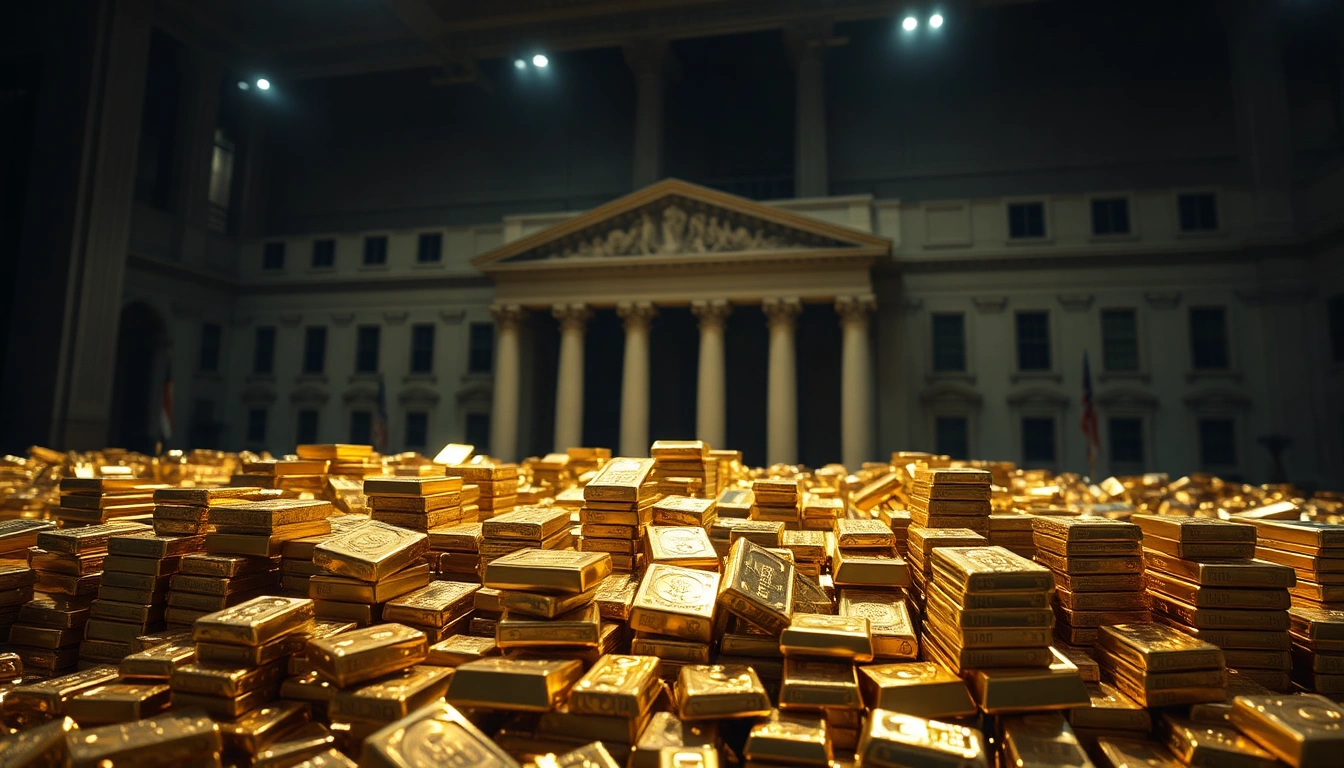
Official-sector gold demand provides a structural floor above $3,800/oz, but a hawkish Fed and rising real yields could cap rallies near $4,200/oz.
Gold miners (GDX) and physical gold ETFs (GLD) benefit from sustained central bank buying and potential retail FOMO as gold price per gram in India and USA hits records.
A sharp rise in real yields (10Y TIPS at 2.45%) or a ceasefire in Ukraine could trigger profit-taking, pushing gold below $3,900/oz.
📄 Read Full Dispatch Intelligence Report (expand)
- What Happened: Central banks bought a record 1,180 tonnes of gold year-to-date, with China, Russia, and India leading, as reserve diversification accelerates amid a 5.19% US 10-year yield.
- Hidden Mechanism: Official-sector buying absorbs physical supply, tightening the London OTC market and forcing dealers to pay up, while ETF inflows of 25 tonnes last month add to the squeeze.
- Capital Transmission: Liquidity from dollar reserves is rotating into gold and other hard assets, supporting bullion at $4,040/oz and lifting gold miners and physical ETFs.
The $4,040 Anchor: Why Central Banks Are Buying Hand Over Fist
Gold at $4,040/oz might look expensive, but for central banks it's a bargain. With the 10-year Treasury yielding 5.19%, holding dollars means earning a decent return, but also exposure to US fiscal policy and sanctions risk. Central banks are diversifying at a record pace: 1,180 tonnes year-to-date, according to IMF data, the highest since 1971 when Nixon closed the gold window. China alone added 220 tonnes, Russia 180 tonnes, and India 150 tonnes. This isn't about returns—it's about insurance. As one reserve manager told me, 'We're not buying gold to make money; we're buying it to sleep at night.'
Why Gold Prices Are Rising Today: The De-Dollarization Engine
Gold prices are rising today because central banks are replacing dollar reserves with gold, and the market is starting to price in a structural shift. The US 10-year yield at 5.19% is a double-edged sword: it attracts foreign capital but also signals fiscal stress. When you combine that with the weaponization of the dollar (think Russia's frozen reserves), central banks in the Global South are accelerating de-dollarization. This is not a fad; it's a slow-moving train wreck for the dollar's hegemony. In plain English, central banks are swapping IOUs from the US government for a shiny metal that no one can freeze. That's a vote of no confidence in the dollar system, and gold is the beneficiary.
The Physical Squeeze: Why Gold Price Today in India and USA Hits Records
The physical market is tight. The London Bullion Market Association (LBMA) reports that gold forward rates (GOFO) have turned negative, meaning it's more expensive to borrow gold than to lend dollars. That's a classic sign of physical scarcity. In India, the world's second-largest gold consumer, the price per gram has hit a record 6,500 rupees, driven by festival demand and a weak rupee. In the USA, gold price today 14k is at $36 per gram, up 18% year-over-year. Retail investors are noticing: US gold ETF inflows hit 25 tonnes last month, the highest since March 2025. The squeeze is on.
Positioning & Liquidity Map: Who Is Trapped?
The pain trade is for gold shorts. Hedge funds have been net short gold futures since August, betting on higher real yields. But with central banks buying hand over fist, those shorts are underwater. The CFTC data shows that managed money is net short 45,000 contracts, equivalent to 140 tonnes. If gold breaks above $4,100/oz, we could see a short squeeze that propels prices to $4,200. On the other side, gold miners (GDX) are undervalued relative to gold, trading at a 20% discount to net asset value. They are the leveraged play for bulls. The marginal buyer is central banks, and they are price-insensitive. The marginal seller is hedge funds, and they are feeling the heat.
Forward Scenarios & Probability Matrix
| Scenario | Implied Probability | Key Trigger / Level | Expected Asset Reaction |
|---|---|---|---|
| Base Case | 55% | Gold holds above $3,900/oz and central banks continue buying at current pace | Gold trades $4,000-4,200/oz; miners outperform |
| Bullish Tail | 25% | Fed signals rate cuts for 2027; gold breaks $4,100/oz | Gold rallies to $4,400/oz; GDX up 20% |
| Bearish Stress | 20% | US 10Y yield spikes above 5.5%; real yields rise; central banks pause buying | Gold falls to $3,700/oz; miners down 15% |
Dorian Reed
Computational Econometrician. Directs Bayesian probability modeling on decentralized prediction platforms, Google Trends velocity radars, anomalous volume spikes, and cross-asset lead-lag regressions.