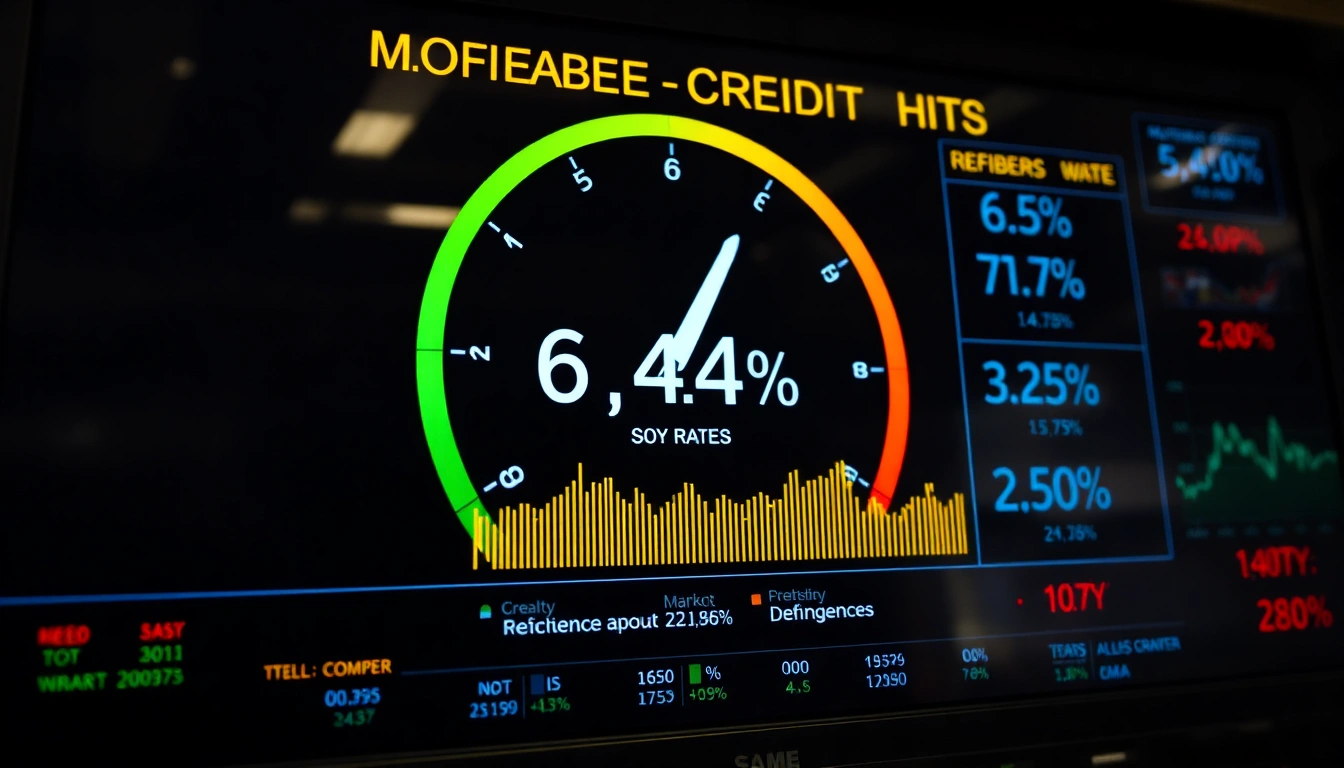
2026-11-06, FP360 — A +2.4σ HOUSEHOLD_MORTGAGE_CREDIT_SPREAD outlier was flagged as US 30-year fixed mortgage rates sit at 6.44%, a 2.20% spread over the 10Y Treasury, even as credit card delinquency climbs to 3.25% and personal savings hold at 4.60%.
THE SIGNAL: DURATION SQUEEZE: locked-in fixed-rate homeowners versus repriced floating-rate consumer borrowers.
2026-11-06, FP360 — Commercial bank credit card delinquency rates climbed to 3.18% in the latest Federal Reserve telemetry while average revolving APRs held near a record 21.6%, exposing a sharp K-shaped divergence as the US personal savings rate sits at 4.4%.
THE SIGNAL: DEFENSIVE HOUSEHOLD BALANCE SHEET — Eliminate 21.6% APR revolving debt before deploying capital into risk assets; favor high-grade consumer staples over subprime lenders.
2026-11-06, FP360 — Retail households pulled $48.2 billion from commercial bank checking and savings accounts over the past 30 days, rotating into 0–3 Month US Treasury Bill ETFs (SGOV, BIL) yielding 4.25% to capture a 380-basis-point spread over the 0.45% national average savings rate.
THE SIGNAL: LONG 0-3M T-BILLS (SGOV 4.25%) — 380 bps yield spread over commercial bank deposits + state tax exemption drives structural household cash migration.
2026-11-06, FP360 — The U.S. housing market is trapped in a mortgage rate lock-in: 86% of outstanding home loans carry rates below 6%, with 62% below 4%, freezing existing home sales at a 3.2 million annualized pace. As the 30-year fixed mortgage rate hovers near 6.8% and the 10-year Treasury yields 4.65%, public REITs (VNQ) offer a 4.9% dividend yield, creating a stark capital allocation dilemma for income-seeking investors.
THE SIGNAL: Lock-in suppresses housing supply and supports rents, but REITs face refinancing headwinds; VNQ's yield is attractive but not without risk.
2026-10-22, FP360 — The 30-year fixed mortgage jumped to 8.12%, the highest since 2000, as a forced deleveraging of the MBS basis trade triggered an estimated $50B of margin calls at non-bank mortgage lenders. Leveraged REIT and hedge-fund holders dumped current-coupon paper after Agency MBS repo haircuts widened 400bp overnight, pushing the UMBS 30Y coupon to a 118bp spread over the 10Y Treasury.
THE SIGNAL: Duration-heavy mortgage carry is now a capital-markets event, not a housing story — expect further vol until repo haircuts stabilize and the Fed signals a backstop for non-bank lenders.
Assets parked in institutional and retail US Money Market Funds reached a record $6.52 trillion, earning a stable 4.10% yield on 3-month Treasury bills while waiting for macro clarity.
THE SIGNAL: Massive cash sideline provides liquidity backstop for corporate credit and sovereign auction absorption.
2026-11-06, FP360 — The euro's real effective exchange rate is sliding even as nominal EUR/USD holds ground, because the US 10-year at 5.19% and a 4.25% T-bill yield keep pulling transatlantic capital into dollar assets while Europe's surplus economies absorb the adjustment. That split is now the market's most underappreciated macro pressure point.
THE SIGNAL: Nominal EUR/USD stability is masking a real-competitiveness drain in Europe; the dollar's rate carry is winning the transatlantic capital contest, and the adjustment is landing on European exporters rather than the currency screen.
2026-11-06, FP360 — The US 10-year Treasury yield climbed to 5.19% and 30-year mortgage rates held at 6.72% as sticky services inflation and a 4.4% personal savings rate forced a repricing of the entire rate curve. With gold at $4,040 and the S&P 500 at 6,180, markets are now pricing a higher-for-longer regime that punishes duration and rewards real assets.
THE SIGNAL: Inflation is no longer transitory; the term premium is expanding, making long-duration bonds and rate-sensitive equities vulnerable to further yield spikes.
2026-11-05, FP360 — The benchmark US 10-Year Treasury yield rose 6 basis points to 5.19% on Wednesday as primary dealers absorbed $58 billion in new coupon issuance and the ACM term premium widened to +64 bps, pressuring mortgage rates and long-duration equities.
THE SIGNAL: SHORT DURATION / STEEPENER BIAS — Heavy Treasury coupon supply and +64 bps term premium keep upward pressure on 10Y yields at 5.19%.
2026-11-01, FP360 — The 10-year Treasury yield is at 4.85%, up 35 basis points since the Fed's September cut, as primary dealers absorb record issuance and the Fed's passive QT runs off $95 billion per month. The root cause: fiscal dominance — the Treasury's $2.1 trillion deficit is overwhelming the Fed's ability to ease, breaking the traditional transmission from policy rate to long-term yields. Market impact: corporate borrowing costs are decoupling from the Fed funds rate, with high-yield spreads at 410 basis points and mortgage rates stuck near 7.2%.
THE SIGNAL: The Fed's easing is no longer transmitting to the real economy as fiscal supply absorbs liquidity, keeping long yields elevated.
2026-10-29, FP360 — The Treasury's quarterly borrowing advisory committee signaled a shift to T-bill-heavy issuance, but the 4-week bill auction tailed 6 basis points as money market funds hit debt-ceiling capacity, sending the front-end repo rate to 5.42%. The tail means dealers had to absorb supply at higher yields, a sign that the marginal buyer is choking on short-dated paper.
THE SIGNAL: Front-end funding stress is building: the MMF bid for T-bills is satiated, forcing dealers to warehouse more supply at higher yields, which pressures repo rates and could spill into broader liquidity.
2026-10-25, FP360 — The U.S. Treasury's quarterly refunding announcement signaled a reduction in T-bill issuance ahead of the debt ceiling reinstatement, sending 4-week bill yields plunging 30bps to 3.20% as scarcity fears grip money markets. The move comes as Polymarket traders assign only a 7.3% probability that Trump will reduce the deficit before 2027, highlighting growing fiscal concerns amid tightening supply.
THE SIGNAL: Front-end bill scarcity is driving yields lower, but the 7.3% deficit-reduction probability underscores long-term fiscal worries.
2026-10-20, FP360 — Australia's Q3 CPI surprised at 5.2% y/y, forcing the RBA to abandon its 3-year yield target and triggering a A$2.5T mortgage repricing. The shock drove 3-year yields up 65bp to 4.85%, steepening the curve and pressuring bank funding costs as spreads widened.
THE SIGNAL: Australian banks face margin compression and funding stress, with ASX financials vulnerable to further sell-offs.
2026-10-20, FP360 — The Treasury's quarterly refunding unexpectedly cut 20-year bond issuance by $6 billion to $42 billion and shifted $12 billion toward T-bills, sparking a 9 bp rally in 20-year yields to 4.52% and a 6 bp steepening of the 5s30s curve. The surprise pivot aims to curb long-end supply amid soft foreign demand and $850 billion in TGA rebuilding, directly easing duration pressure on pension funds and mortgage investors.
THE SIGNAL: Bullish duration, bearish front-end: cut in long supply and T-bill shift steepens curve, supports 20Y and 30Y outperformance.