Mortgage-Credit Gauge Hits +2.4σ: 6.44% 30Y Rates Meet 3.25% Card Delinquencies
2026-11-06, FP360 — A +2.4σ HOUSEHOLD_MORTGAGE_CREDIT_SPREAD outlier was flagged as US 30-year fixed mortgage rates sit at 6.44%, a 2.20% spread over the 10Y Treasury, even as credit card delinquency climbs to 3.25% and personal savings hold at 4.60%.
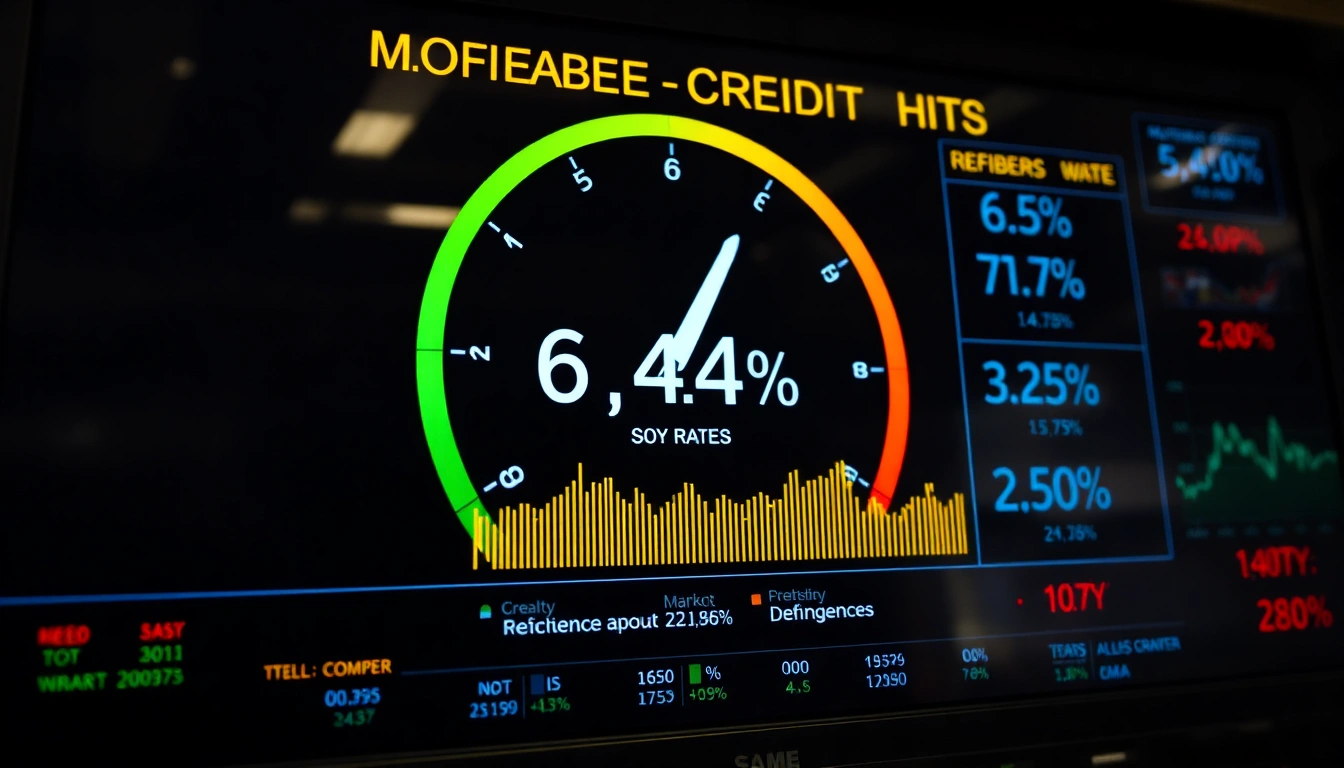
DURATION SQUEEZE: locked-in fixed-rate homeowners versus repriced floating-rate consumer borrowers.
Front-end duration and cash proxies (3M T-Bills / SGOV) plus mortgage-servicer float income; locked-in low-coupon MBS prepayment risk stays suppressed, supporting MBS convexity and bank net interest margins.
Variable-rate consumer credit — card, HELOC, and private-label lenders facing rising 3.25% delinquency accruals, and rate-sensitive small-caps if the 2.20% mortgage-Treasury spread widens further.
📄 Read Full Dispatch Intelligence Report (expand)
- What Happened: A HOUSEHOLD_MORTGAGE_CREDIT_SPREAD outlier hit +2.4σ with 30Y fixed mortgage rates at 6.44% — a 2.20% spread over the 10Y Treasury — while credit card delinquency reached 3.25%.
- Hidden Mechanism: Fixed-rate homeowners are functionally locked in, so monetary transmission now bypasses the mortgage channel and lands almost entirely on floating-rate consumer borrowers.
- Capital Transmission: Cash rotates toward 3M T-Bills (SGOV) and front-end duration while leveraged variable-rate consumer debt becomes the marginal liquidation pool.
Why Mortgage Rates Are Decoupling From the Treasury Curve
The 6.44% 30-year fixed rate against a 2.20% spread over the 10Y Treasury is the signal, not the headline. Historically that primary-secondary spread compresses toward ~1.5–1.8% in benign regimes; a +2.4σ print signals MBS convexity hedging, servicing-cost pass-through, and duration supply pushing mortgage pricing wide of the sovereign curve. The practical effect: refinancing activity collapses and existing homeowners with sub-4% coupons have no incentive to transact — freezing housing turnover and the mortgage-credit multiplier.
This is why equity weakness and consumer-credit stress can co-exist with a firm Treasury bid. When mortgage rates stay pinned near 6.44%, the transmission of tighter policy stops flowing through home finance and redirects into revolving credit, where the repricing is instantaneous.
The Consumer Credit Fault Line: 3.25% Delinquency vs. 4.60% Savings
The stress shows up in revolving credit before it shows up in any equity tape. Credit card delinquency at 3.25% against a 4.60% personal savings rate means the marginal borrower is drawing down buffers while variable-rate obligations reset higher. Because fixed mortgages are frozen out of transmission, banks and non-bank lenders carry the delinquency accrual on unsecured books — a direct hit to consumer-credit loss provisions.
Positioning & Liquidity Map: Who Is Trapped?
Fixed-rate borrowers sitting on sub-4% coupons are economically trapped — they cannot refinance at 6.44% and will not sell into a frozen turnover market, so the mortgage-credit channel is inert. The offside cohort is floating-rate consumer borrowers: card, HELOC, and private-label balances repricing instantly with delinquency already at 3.25%. Stop-loss and margin clusters sit in consumer-finance lenders and rate-sensitive small-caps, where a further widening of the 2.20% mortgage spread would force provision upgrades. The marginal buyer is the front-end Treasury bid — 3M T-Bills and SGOV — absorbing cash that would otherwise fund consumer leverage. Forced sellers are leveraged variable-rate borrowers and, indirectly, lenders marking unsecured books.
Forward Scenarios & Probability Matrix
| Scenario | Implied Probability | Key Trigger / Level | Expected Asset Reaction |
|---|---|---|---|
| Base Case | 55% | Mortgage spread holds 2.0–2.3%; delinquency stabilizes near 3.25% | 30Y range-bound near 6.44%; front-end T-Bill demand persists |
| Bullish Tail | 25% | MBS spread compresses below 2.0% on softer duration supply | Modest mortgage relief; risk-on rotation into rate-sensitive small-caps |
| Bearish Stress | 20% | Spread breaks above 2.5% with delinquency toward 3.5% | Consumer-credit lenders repriced lower; 3M T-Bill bid intensifies |
Positioning takeaway: Hold liquid reserves in 3M T-Bills (SGOV), eliminate floating-rate consumer debt, and treat the 2.20% mortgage-Treasury spread as the lead indicator for consumer-credit loss acceleration.
Quantitative Macroeconomic Strategist and financial media director. Leads newsroom editorial standards, central bank rate corridor monitoring, G10 sovereign yield curve telemetry, and statistical hypothesis verification.