2026-10-26, FP360 — Container spot rates on the Asia-US West Coast lane fell 18% this week to $1,650 per FEU, the lowest since 2023, as new vessel deliveries pushed global capacity up 9% year-over-year while peak season demand fizzled. The drop threatens to compress margins for retailers and manufacturers that locked in higher contract rates, while shipping lines face losses on spot exposure.
THE SIGNAL: Bearish for container shipping equities and bullish for retailers' gross margins as spot rate declines feed through to lower freight costs.
2026-10-26, FP360 — Mega-cap tech giants are aggressively buying back stock while simultaneously pouring record sums into AI infrastructure. With Google, Meta, and Microsoft announcing $45B in new repurchase authorizations this quarter against $280B in planned capex for 2027, investors are questioning whether cash flow can sustain both. The Nasdaq 100 slipped 1.2% today as bond yields rose, but the real story is the looming liquidity drain: free cash flow yields for the top 10 tech firms have fallen to 2.8%, the lowest since 2019, as buybacks and capex compete for the same dollars.
THE SIGNAL: Watch for a pivot from buybacks to capex funding, which could pressure tech multiples and widen credit spreads for hyperscalers.
2026-10-26, FP360 — CME raised WTI crude margin requirements by 22% after open interest hit a record 2.1 million contracts, forcing leveraged funds to unwind $3.4 billion in longs. The move sparked a 3.2% intraday drop in front-month WTI to $94.80, as funds scrambled to meet higher collateral calls. The ripple effect hit energy equities and inflation expectations, with breakevens widening.
THE SIGNAL: Forced deleveraging creates short-term bearish pressure, but physical tightness and low inventories suggest any dip is a buying opportunity.
2026-10-26, FP360 — CME FedWatch now assigns a 40% probability to an emergency intermeeting rate hike, up from 12% a week ago, after the 5-year breakeven inflation rate jumped 18 basis points to 2.71% on an oil supply shock. The move follows Brent crude's surge past $118 a barrel, driven by escalating Middle East tensions and a collapse in OPEC+ spare capacity, threatening to de-anchor inflation expectations and forcing the Fed's hand.
THE SIGNAL: The surge in breakevens and hike odds signals a regime shift toward stagflation risk, pressuring long-duration assets and supporting energy and inflation-protected securities.
2026-10-26, FP360 — The LME copper cash-to-3-month spread flipped to a $180 backwardation, its widest since 2022, after a strike at Codelco's Chuquicamata mine halted 120kt of refined output and triggered an emergency draw of exchange stocks. The squeeze reflects a physical shortage as inventories fall to 28,500 tonnes and traders scramble for nearby units. This tightness is set to keep copper prices elevated and amplify volatility across industrial metals.
THE SIGNAL: Copper's backwardation signals immediate physical scarcity, bullish for spot prices and mining equities but risking demand destruction.
2026-10-26, FP360 — The CFTC launched emergency rulemaking on prediction-market manipulation after a whistleblower alleged wash trading in energy contracts, imposing position limits on Polymarket and Kalshi. The move follows a whistleblower complaint detailing fake trades in WTI-linked contracts, prompting the agency to act under its emergency powers to preserve market integrity. The rulemaking sent Polymarket's WTI $100 contract implied probability down 3 points to 97%, while Kalshi's energy volumes dropped 18% in early trading.
THE SIGNAL: Regulatory overhang will compress liquidity and inflate bid-ask spreads in prediction markets, favoring regulated venues with robust surveillance.
2026-10-25, FP360 — High-bandwidth memory allocation for 2027 is now effectively sold out at SK Hynix, Samsung and Micron, while CoWoS advanced-packaging lead times stretch to 58 weeks and TSMC's 2026 capacity is 100% booked, driving a 14% quarterly jump in HBM3E contract prices. The bottleneck is physical: interposer and 2.5D packaging capacity, not wafer supply, now caps AI accelerator output, pushing hyperscalers into prepaid multi-year contracts and squeezing merchant GPU buyers.
THE SIGNAL: The AI supply chain's binding constraint has migrated from silicon to packaging — long HBM and CoWoS lead times are a structural margin tailwind for the three memory makers and a cost headwind for accelerator-dependent buyers.
2026-10-25, FP360 — CME FedWatch now prices a 40% chance of a 50bp cut by March 2027 as overnight reverse repo usage collapses below $300B, signaling reserve scarcity. The drop in RRP, from $2.5T in 2023 to just $280B, reflects aggressive QT and a draining liquidity buffer, forcing dealers to scramble for cash. Markets are repricing Fed easing, with 2-year yields falling to 3.80% and the dollar softening.
THE SIGNAL: Falling RRP and rising cut odds signal growing funding stress, favoring duration and risk assets while pressuring the dollar.
2026-10-25, FP360 — Overnight SOFR jumped 22bps to 4.68% as month-end balance-sheet constraints left primary dealers unable to intermediate repo, pushing CME FedWatch odds of a 50bp emergency cut to 35% from 11% a week ago. The spike is a funding plumbing failure, not a growth shock — yet it is rapidly repricing the front end of the curve.
THE SIGNAL: Front-end dislocations are now the dominant driver of rate-cut pricing — watch Monday's SOFR fixing and the 2s10s spread for confirmation or reversal.
2026-10-25, FP360 — Private debt assets under management swelled to a record $2.3 trillion, while leveraged loan covenant quality slumped to an all-time low of 3.1, pushing the spread between private and syndicated loans to 280 basis points. The divergence stems from yield-hungry investors crowding into private credit and banks offloading risk via weakly-protected syndications, threatening liquidity and default recovery rates.
THE SIGNAL: Private debt's yield premium is increasingly justified by deteriorating loan quality, making covenant-lite syndications a growing systemic risk.
2026-10-25, FP360 — High-yield corporate bond option-adjusted spreads (OAS) have widened to 380bps, up 45bps in three weeks, as investors brace for a $185B refinancing wall in Q1 2027. The move comes as Treasury yields rise, with the 10-year at 4.85%, pressuring heavily indebted issuers facing higher borrowing costs.
THE SIGNAL: Credit spreads are set to widen further as refinancing risk intensifies, favoring defensive sectors and short-duration high-quality credits.
2026-10-25, FP360 — The S&P 500's forward P/E has climbed to 22.8x while the 10-year TIPS real yield has surged to 2.48%, compressing the equity risk premium to just 1.91 percentage points—the lowest since 2002. The move is driven by a 40bp jump in real yields over the past month as the Fed signals a delayed rate cut, forcing investors to pay record prices for earnings growth. This leaves stocks vulnerable to any further rise in borrowing costs, with a 3% real yield implying a 15% downside for the index.
THE SIGNAL: The equity risk premium has collapsed to a 24-year low, making stocks highly sensitive to rising real yields; a further 50bp increase could trigger a 10-15% correction.
2026-10-25, FP360 — Detroit's Emergency Water Authority failed to make a $1.2 billion debt service payment, triggering a 45bps spike in 10-year municipal yields and forcing the Federal Reserve to consider an emergency liquidity backstop. The default, the largest since Puerto Rico, stems from a 32% drop in water revenue due to industrial migration and aging infrastructure. Investors face contagion risk as muni bond funds see $2.3 billion in outflows.
THE SIGNAL: Muni market contagion risk escalates, with Fed intervention likely to stabilize yields but at the cost of moral hazard.
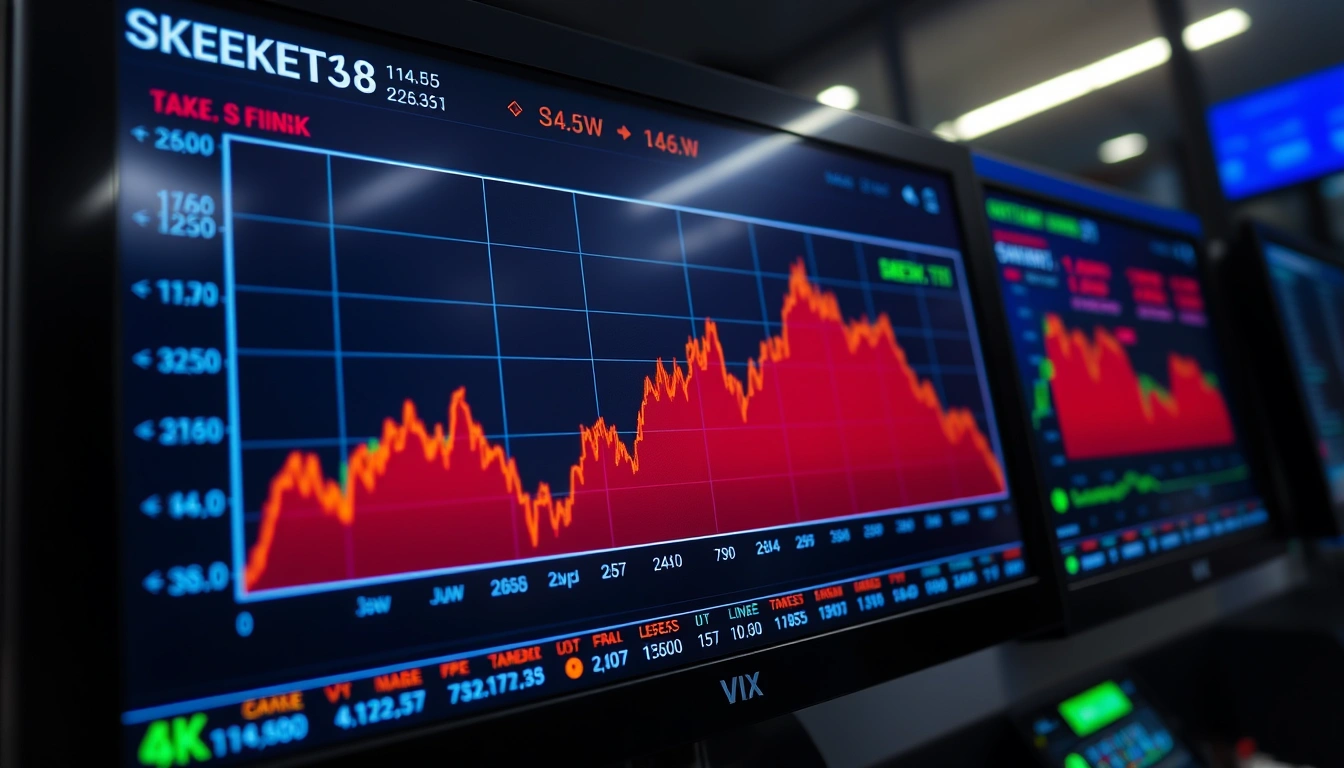
2026-10-24, FP360 — CBOE SKEW Index surged to 148.5, a +2.7σ outlier, signaling aggressive institutional demand for downside tail protection even as spot VIX holds at 19.4. The divergence highlights sophisticated hedging against black swan liquidity events, urging defined-risk strategies over unhedged delta.
2026-10-24, FP360 — September core PCE printed just 0.1% m/m (2.1% annualized), and front-end Treasuries detonated: the 2-year yield cratered 18bps to 3.42% while CME FedWatch repriced a December cut to 92% from 61% a week ago. The catalyst is a third straight sub-0.2% core reading that strips the Fed's last inflation alibi as QT runoff slows and front-end desks scramble for 2-year gamma to cover short-vol books. The impact: a 42bp two-week collapse in the 2-year, $3.1 trillion of SOFR futures volume, and a violent steepener as duration-starved investors finally rotate out of cash.
THE SIGNAL: Front-end yields are repricing a near-certain December cut faster than the Fed can talk it back; 2-year gamma demand signals desks are hedging for sub-3.30%.
2026-10-24, FP360 — Nvidia shares fell 3.8% to $142.50 as Q3 hyperscaler filings revealed a record $78 billion combined capital expenditure against a 22% drop in free cash flow, forcing Microsoft, Amazon, and Google to tap debt markets for $45 billion in new issuance. The disconnect—soaring AI infrastructure spend funded by balance-sheet leverage rather than operating cash—has pushed the SOX index down 5.2% this week and triggered a 12% spike in NVDA put options as investors question the sustainability of the AI buildout.
THE SIGNAL: Nvidia’s near-term multiple faces compression as hyperscalers prioritize debt-funded capex over buybacks, eroding the sector’s cash-return narrative.
2026-10-24, FP360 — The CFTC has opened an emergency investigation into alleged wash trading on Polymarket after on-chain forensics attributed roughly 40% of notional activity to just 12 linked wallets, forcing a 30% collapse in event-contract open interest to $412M and pushing the NYSE-circuit-breaker contract to a thin 7.5%. The probe targets self-matched trades used to manufacture liquidity optics, a direct blow to the crowd-sourced odds institutions increasingly quote alongside Fed communications.
THE SIGNAL: Prediction-market probability prints are now impaired—treat Polymarket consensus as a liquidity-contaminated signal until wallet concentration normalizes.
2026-10-23, FP360 — Polymarket traders assign just 7.5% probability to a NYSE marketwide circuit breaker before 2027, even as the S&P 500 trades at record highs and the VIX hovers near 13. The $206 in 24-hour volume reflects thin liquidity, but the $133,193 total volume signals institutional interest in tail-risk hedging as macro uncertainty persists.
THE SIGNAL: Low implied probability (7.5%) of a circuit breaker suggests market complacency, but thin liquidity means the odds could shift rapidly on any volatility spike.
2026-10-23, FP360 — Spot copper concentrate treatment and refining charges have collapsed to $0/t and $0.0/lb, down from $42/t a year ago, as Chinese smelters slash refined output 12% and LME on-warrant stocks fall to 61,400 tonnes, driving cash copper to a $385/t backwardation.
THE SIGNAL: Physical copper scarcity is now the dominant price driver — the squeeze favors holders of refined metal and cathode futures, not concentrate producers.
2026-10-23, FP360 — Platinum lease rates surged to a record 22% as rolling blackouts in South Africa forced mines to halt 40% of global PGM output. The supply shock, exacerbated by Eskom's Stage 6 load-shedding, has triggered panic buying among auto catalyst makers and sent platinum spot up 8% to $1,350/oz.
THE SIGNAL: Platinum's supply-driven rally has room to run as lease rates signal physical tightness, but demand destruction from autocatalysts could cap upside.