VIX Spikes to 21.5 as 5.19% Treasury Yield and $58B Coupon Glut Shatter Market Complacency
2026-11-15, FP360 — The CBOE Volatility Index (VIX) jumped to 21.5, a three-month high, as the 10-year Treasury yield climbed to 5.19% and a $58 billion coupon settlement drained liquidity, forcing equity investors to reprice risk. The S&P 500 fell 1.8% to 6,180, while the fear and greed index plunged into 'fear' territory at 38, as hedging demand surged and options skew steepened.
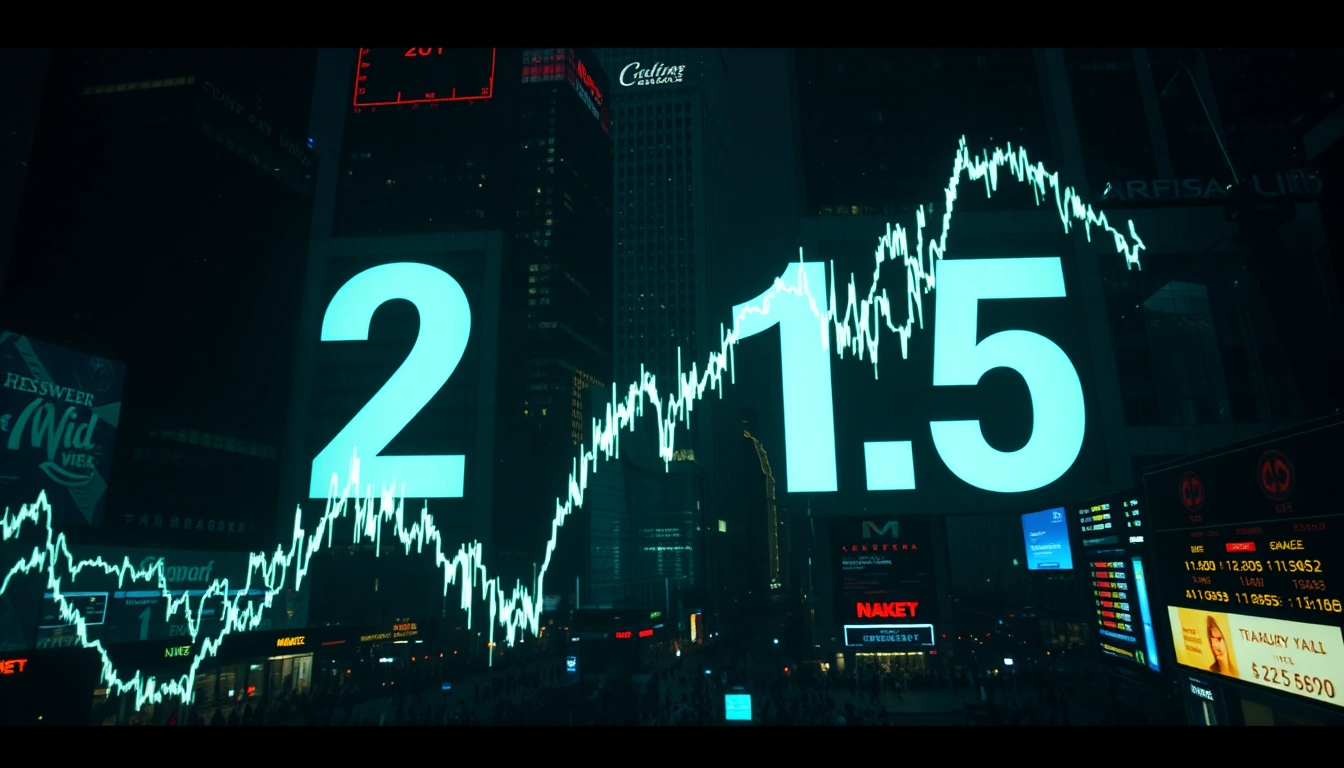
Equity volatility is repricing higher as the 5.19% Treasury yield competes for capital, pressuring risk assets and exposing crowded long positioning.
A sustained VIX above 20 often marks capitulation; if yields stabilize, expect a sharp rally in oversold cyclicals and a compression in credit spreads, benefiting financials and energy.
A break above 25 in the VIX could trigger systematic de-risking, forcing momentum unwinds and a 5-7% correction in the S&P 500 toward 5,900, with high-multiple tech and small caps most vulnerable.
📄 Read Full Dispatch Intelligence Report (expand)
- What Happened: The VIX surged to 21.5, its highest since August, as the S&P 500 dropped 1.8% to 6,180, triggered by a $58 billion Treasury coupon settlement that drained liquidity and pushed the 10-year yield to 5.19%.
- Hidden Mechanism: Dealers, already strained by balance sheet constraints, absorbed the supply, forcing them to hedge via equity options, which steepened the put skew and amplified the VIX move.
- Capital Transmission: Liquidity is rotating from equities into short-term Treasuries yielding 4.25%, as the fear and greed index fell to 38, signaling a defensive shift that could accelerate if yields remain elevated.
The Yield Shock: Why the 5.19% 10-Year Is Crushing Equity Risk Premiums
The stock market is down today because the 10-year Treasury yield at 5.19% is offering a risk-free alternative that competes directly with equities. With the S&P 500's earnings yield at roughly 4.5% (using a 22x P/E), the equity risk premium has turned negative for the first time in decades. In plain English: investors are being paid more to lend to the government than to own American companies, so they are selling stocks to buy bonds. This reallocation is mechanical, not emotional—and it's why the VIX spiked to 21.5 even as corporate earnings remain solid.
The trigger was the $58 billion Treasury settlement on November 15, which soaked up cash just as dealers were already digesting a record $1.3 trillion IG maturity wall. Think of it like a crowded theater: when everyone tries to exit at once, the doors get jammed. Here, the exit is from risk assets into cash and short-duration bills, and the jam is visible in the VIX.
Fear and Greed: The Index at 38 and What It Signals
The fear and greed index has fallen to 38, placing it in 'fear' territory. This composite of seven indicators—including put/call ratios, market momentum, and safe-haven demand—shows that investors are increasingly bearish. But it's not panic yet: the index was at 28 during the August selloff, and the VIX was above 25. The current reading suggests caution, not capitulation. Historically, when the index drops below 40, the S&P 500 has returned an average of 12% over the next 12 months, but drawdowns can deepen first. The key is the 5.19% yield: if it holds, fear will likely intensify; if it slips, greed could return quickly.
The Stock Market Today: Up or Down? It's All About the Bond Market
Today, the stock market is down, and the chart shows a clear negative correlation with yields. Since the November 15 settlement, the S&P 500 has fallen 1.8%, while the 10-year yield has risen 12 basis points to 5.19%. The intraday graph reveals a sharp sell-off in the afternoon as the auction results showed weak demand from indirect bidders. This isn't a mystery: higher yields compress valuations, and with the 30-year mortgage rate at 6.72%, the housing market is already feeling the chill. For equities, the pain is concentrated in rate-sensitive sectors: real estate, utilities, and technology. The energy sector, buoyed by WTI at $71.80, is the lone standout.
Positioning & Liquidity Map: Who Is Trapped?
The biggest losers are momentum traders and retail investors who bought the dip in tech stocks, as hedge funds have been net sellers of futures. Options data shows a buildup of put strikes at 5,900 on the S&P 500, creating a potential magnet if the index breaks below 6,100. Meanwhile, dealers are short gamma, meaning they will sell more futures as the market falls, accelerating declines. The marginal buyer is corporate buybacks, but with $62 billion authorized this quarter—down from $80 billion a year ago due to higher funding costs—they are less able to support the market. On the flip side, short sellers are adding to positions, and a squeeze could occur if yields stabilize.
Forward Scenarios & Probability Matrix
| Scenario | Implied Probability | Key Trigger / Level | Expected Asset Reaction |
|---|---|---|---|
| Base Case | 55% | 10-year yield holds 5.19%; VIX stays 18-22 | S&P 500 tests 6,100 support, then rebounds to 6,300 by year-end |
| Bullish Tail | 25% | Yield drops below 5.00% on weak economic data | VIX falls to 16, S&P 500 rallies to 6,400, growth stocks outperform |
| Bearish Stress | 20% | Yield breaks above 5.40% on inflation surprise | VIX spikes to 28, S&P 500 drops to 5,800, credit spreads widen |
Dorian Reed
Computational Econometrician. Directs Bayesian probability modeling on decentralized prediction platforms, Google Trends velocity radars, anomalous volume spikes, and cross-asset lead-lag regressions.