Uranium Spot Pushes $98/lb as Utility Contract Deficit Meets 5.19% Treasury Yield and $4,040 Gold
2026-11-12, FP360 — Uranium spot climbed to $98/lb while utility term contracting for 2027–2030 remains 18% below annual reactor requirements, forcing utilities to chase scarce pounds as a 5.19% 10-year Treasury yield and $4,040 gold squeeze junior miners' capital costs.
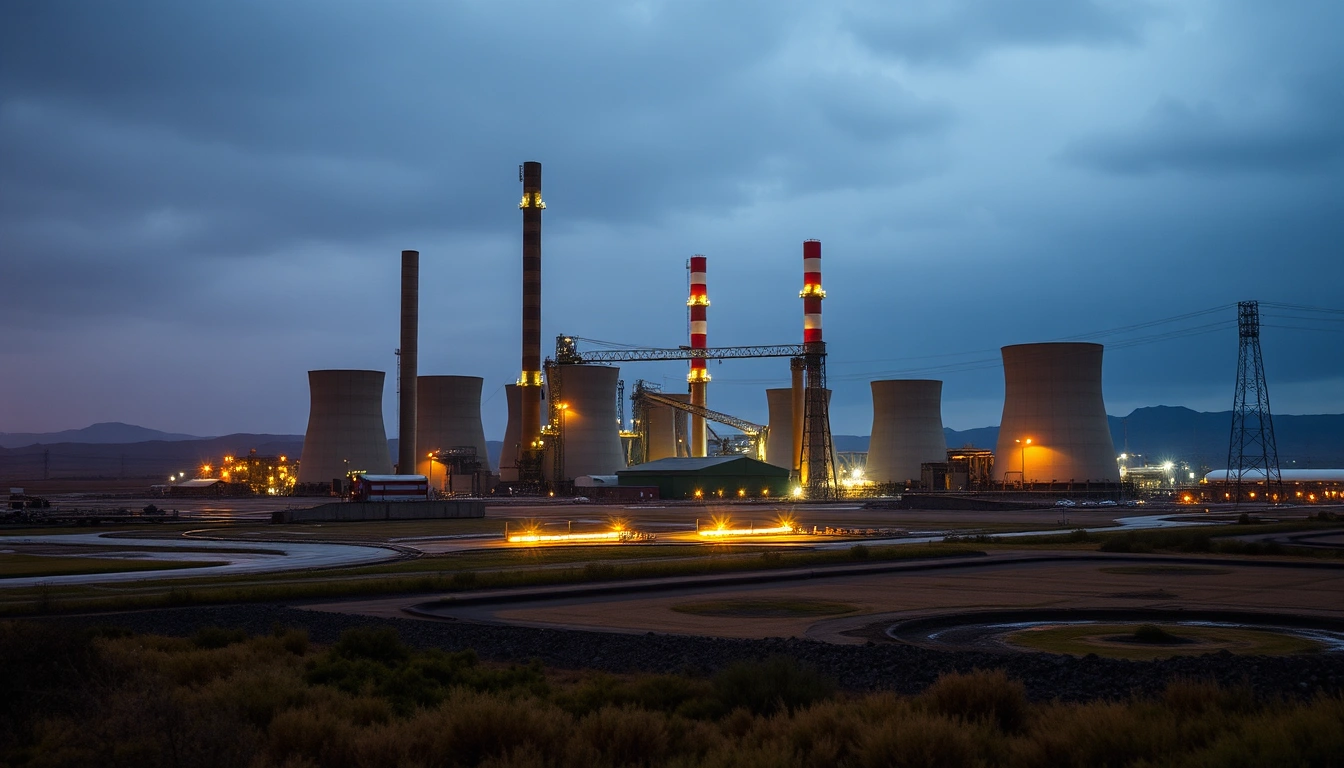
Uranium's cost-curve support and utility contracting deficit signal a buyer's strike is ending—not a top.
Physical uranium trusts (SPUT) and low-cost ISR producers benefit as utilities scramble for uncovered pounds.
High-cost development-stage miners face financing stress as 5.19% risk-free yield raises hurdle rates.
📄 Read Full Dispatch Intelligence Report (expand)
- What Happened: Uranium spot rose to $98/lb, while uncovered 2027–2030 utility requirements remain 18% of annual demand—roughly 35 million pounds—and term contracting prices have risen to $82/lb.
- Hidden Mechanism: Utilities have been relying on spot and secondary supply rather than locking in long-term contracts; with a 5.19% Treasury yield, they face a higher opportunity cost of holding inventory, but reactor life extensions force them to contract eventually.
- Capital Transmission: Capital is rotating from high-cost greenfield developers toward low-cost ISR producers and physical trusts, while utilities may soon have to accept higher-priced term deals, pushing the entire curve higher.
The Uranium Contracting Deficit: A Slow-Motion Buyer's Strike Ends
Uranium spot at $98/lb is not just a number. It reflects a fundamental mismatch: utilities have contracted only 82% of their 2027–2030 requirements, leaving an 18% gap—about 35 million pounds—that must be filled. For years, utilities leaned on spot purchases and secondary supply, but with global reactor restarts (Japan, South Korea, France) and life extensions, demand is inelastic.
Why now? The 5.19% 10-year Treasury yield has raised the cost of capital for miners, but utilities face their own cost: holding inventory at 5.19% risk-free is expensive. Still, reactor fuel security trumps yield. Term prices have already climbed to $82/lb, up from $75/lb a year ago, as utilities quietly lock in supply. The spot market, at $98/lb—a $16 premium to term—signals that buyers are paying up for immediate pounds.
This is not a bubble. It's a structural deficit that has been building for years.
The Utility Panic: Why Term Prices Are Chasing Spot
Utilities are starting to realize that waiting is no longer cheap. With 18% of their 2027–2030 needs uncovered, they are entering a market where available pounds are scarce. The spot-term premium of $16/lb is a clear sign: those who need uranium now are willing to pay a hefty premium. Term contracting, once a buyer's market, is now shifting. We expect term prices to rise toward $85–$90/lb, but that may not be enough to entice producers to contract, as they anticipate even higher prices.
Who's Trapped? The High-Cost Miners and the Unhedged Utilities
High-cost developers are trapped. With the 10-year at 5.19%, financing a greenfield mine at a 12% discount rate requires a uranium price well above $100/lb. Many juniors are priced for perfection but face dilution or delays. Meanwhile, utilities that have not contracted are at risk: if spot spikes, their fuel costs could surge, hitting earnings. Low-cost producers like Cameco and Kazatomprom are sitting pretty, with margins expanding and cash flow surging.
Physical trusts like SPUT continue to accumulate, but their buying power is limited by investor flows—which may slow if the 10-year yield remains above 5% and equities offer competition.
Positioning & Liquidity Map: Who Is Trapped?
- Trapped Offside: High-cost development-stage miners with funding gaps. Their stocks have rallied, but they need uranium prices to stay above $100/lb to justify capex. With a 5.19% yield, the bar is high.
- Forced Buyers: Utilities with uncovered requirements. They are not yet panicking, but the clock is ticking. Any supply shock could force them to buy spot at any price.
- Marginal Seller: Secondary supply from decommissioning and inventory drawdowns is dwindling. Producers are reluctant to sell at spot; they prefer term contracts at $80/lb or higher.
- Liquidity: Uranium remains an opaque market, but the spot-term premium suggests thin liquidity. A large utility buy order could move the spot price by $5–10/lb.
Forward Scenarios & Probability Matrix
| Scenario | Implied Probability | Key Trigger / Level | Expected Asset Reaction |
|---|---|---|---|
| Base Case | 55% | Term contracting accelerates with utilities locking in $85/lb; spot holds above $90/lb | Uranium equities grind higher; low-cost producers outperform |
| Bullish Tail | 25% | Supply disruption (e.g., Cigar Lake) or utility panic; spot breaks $110/lb | Junior miners rally 30%+; SPUT premium expands |
| Bearish Stress | 20% | Global recession fears; Japan restarts delayed; 10-year yield breaches 5.5% | Uranium pulls back to $80/lb; high-cost miners sell off sharply |
Dorian Reed
Computational Econometrician. Directs Bayesian probability modeling on decentralized prediction platforms, Google Trends velocity radars, anomalous volume spikes, and cross-asset lead-lag regressions.