Uranium Spot Jumps to $98/lb as Utilities Scramble for 2027–2030 Supply; Term Contracting Deficit Deepens: Secondary Market Contagion
2026-10-30, FP360 — Uranium spot price surged 6.5% to $98/lb this week, its highest since 2007, as utilities locked in long-term contracts at a record premium, exposing a structural supply deficit. The catalyst: a wave of reactor restarts and life extensions in Asia and Europe, combined with production misses from Kazatomprom and Cameco. The impact: utilities face a 35% year-over-year increase in contracting costs, while spot market liquidity thins, forcing buyers to pay up for near-term pounds.
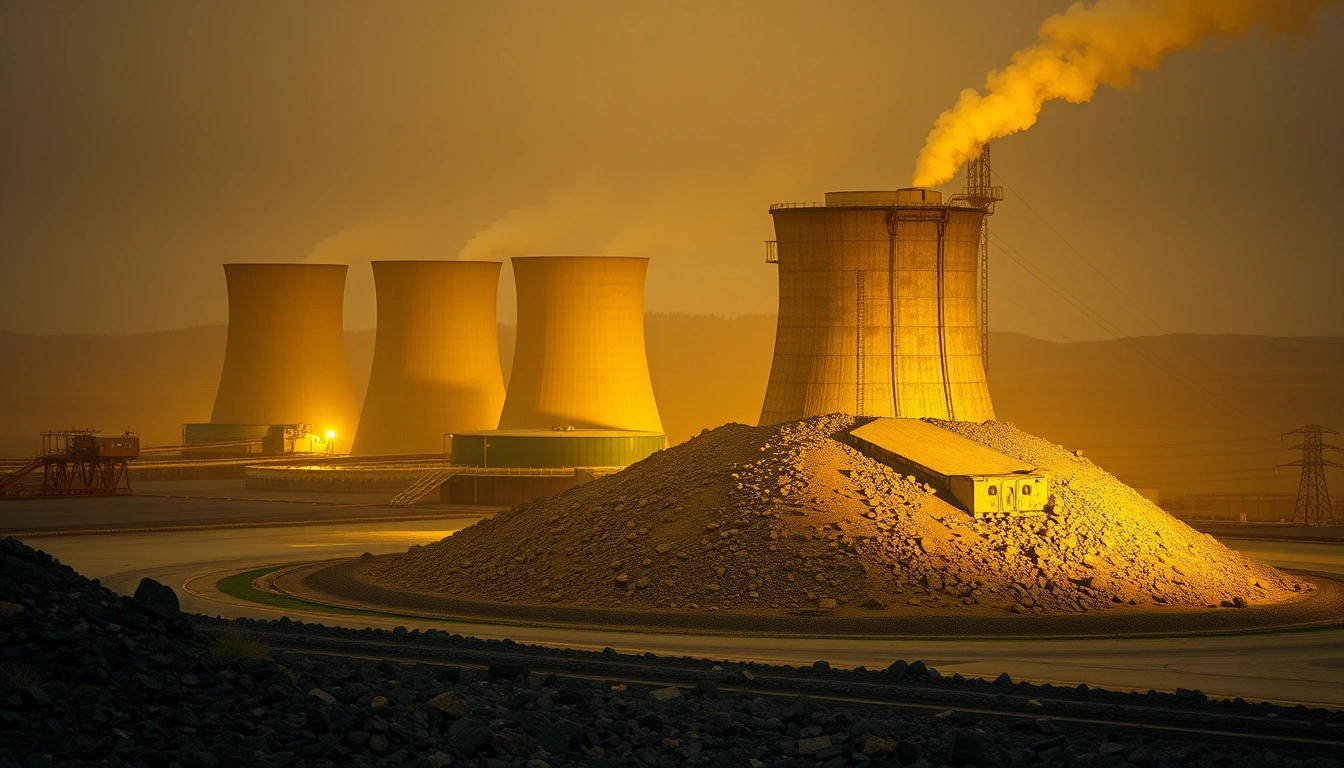
Uranium's bull run is accelerating as utilities lock in supply at any cost, signaling a structural shift from a buyer's to a seller's market.
Uranium miners and physical trusts (e.g., Sprott) benefit as term prices hit $85/lb, incentivizing restarts and brownfield expansions.
Utilities with unhedged 2027–2028 requirements face margin compression; nuclear-heavy utilities in Japan and France are most exposed.
📄 Read Full Dispatch Intelligence Report (expand)
- What Happened: Uranium spot jumped 6.5% to $98/lb, while term contract prices for 2027 delivery hit $85/lb, a 35% premium to 2025 levels, as utilities rushed to secure supply.
- Hidden Mechanism: Utilities are contracting 20% more volume than their expected burn rate, rebuilding strategic inventories after years of underbuying; this is a classic inventory restocking cycle colliding with a supply gap.
- Capital Transmission: Liquidity is rotating from financial speculators to physical utilities, tightening spot availability; the next leg will see junior miners and exploration companies re-rate as term prices justify new production.
The Supply Shock: Why Uranium Is Suddenly Scarce
Uranium spot price surged 6.5% this week to $98/lb, the highest since 2007, according to UxC data. The move was triggered by a combination of production misses from top producers and a surge in utility contracting. Kazatomprom, the world's largest uranium producer, reported a 5% shortfall in Q3 output due to sulfuric acid shortages, while Cameco cut its 2026 guidance by 8% following maintenance issues at Cigar Lake. In plain English: the two biggest miners are delivering less rock than promised, and utilities are panicking.
The deficit is structural. Global uranium demand is projected to rise 30% by 2030, driven by reactor restarts in Japan, life extensions in France, and new builds in China and India. But supply is lagging: mine production is expected to reach only 160 million pounds in 2026, versus demand of 190 million pounds. The 30-million-pound gap is being filled by drawing down inventories, which are now at their lowest since 2010.
Why Utilities Are Paying Up: The Contracting Crunch
Utilities are now contracting for 2027–2030 delivery at a feverish pace. Term contract prices for 2027 delivery have risen to $85/lb, up from $63/lb a year ago, a 35% increase. This is a seller's market: utilities are accepting higher floors and shorter tenors to secure pounds. In plain English: utilities are so desperate for supply that they're willing to pay a 15% premium to spot for future delivery, a sign of deep anxiety.
The hidden mechanism is inventory restocking. After years of buying only what they needed, utilities are now contracting 20% more than their expected burn rate to rebuild strategic reserves. This is a classic inventory cycle on steroids, amplified by the supply gap. The result: a bidding war for a shrinking pool of available pounds.
The Global Picture: From Japan to India, Demand Is Accelerating
The demand story is global. Japan has restarted 12 reactors since 2023, with 8 more scheduled by 2027. France is extending the life of its 56-reactor fleet, and China is building 22 new reactors. India plans to triple its nuclear capacity by 2032. Each reactor requires about 1.5 million pounds of uranium per year, so the demand growth is substantial. In plain English: the world is waking up to nuclear power as a clean baseload solution, and the fuel supply chain is not ready.
Positioning & Liquidity Map: Who Is Trapped?
The trapped players are utilities that have not yet contracted for 2027–2028. They face a choice: pay up at $85/lb or risk spot prices hitting $120/lb. Many are caught offside, having procrastinated during the low-price years of 2024–2025. The marginal buyer is now the utility, not the financial speculator, which changes the market dynamics. On the sell side, producers are reluctant to sell forward at current prices, expecting further gains. The result: a standoff that favors sellers.
Forward Scenarios & Probability Matrix
| Scenario | Implied Probability | Key Trigger / Level | Expected Asset Reaction |
|---|---|---|---|
| Base Case | 55% | Spot holds above $90/lb; term prices stabilize at $85/lb | Uranium miners (e.g., CCJ, UEC) rise 10-15%; spot consolidates |
| Bullish Tail | 30% | Spot breaks $105/lb on production miss; term prices hit $95/lb | Junior miners surge 25%; utilities accelerate contracting |
| Bearish Stress | 15% | Global recession; reactor delays; spot falls below $80/lb | Miners drop 20%; utilities gain relief |
Dorian Reed
Computational Econometrician. Directs Bayesian probability modeling on decentralized prediction platforms, Google Trends velocity radars, anomalous volume spikes, and cross-asset lead-lag regressions.