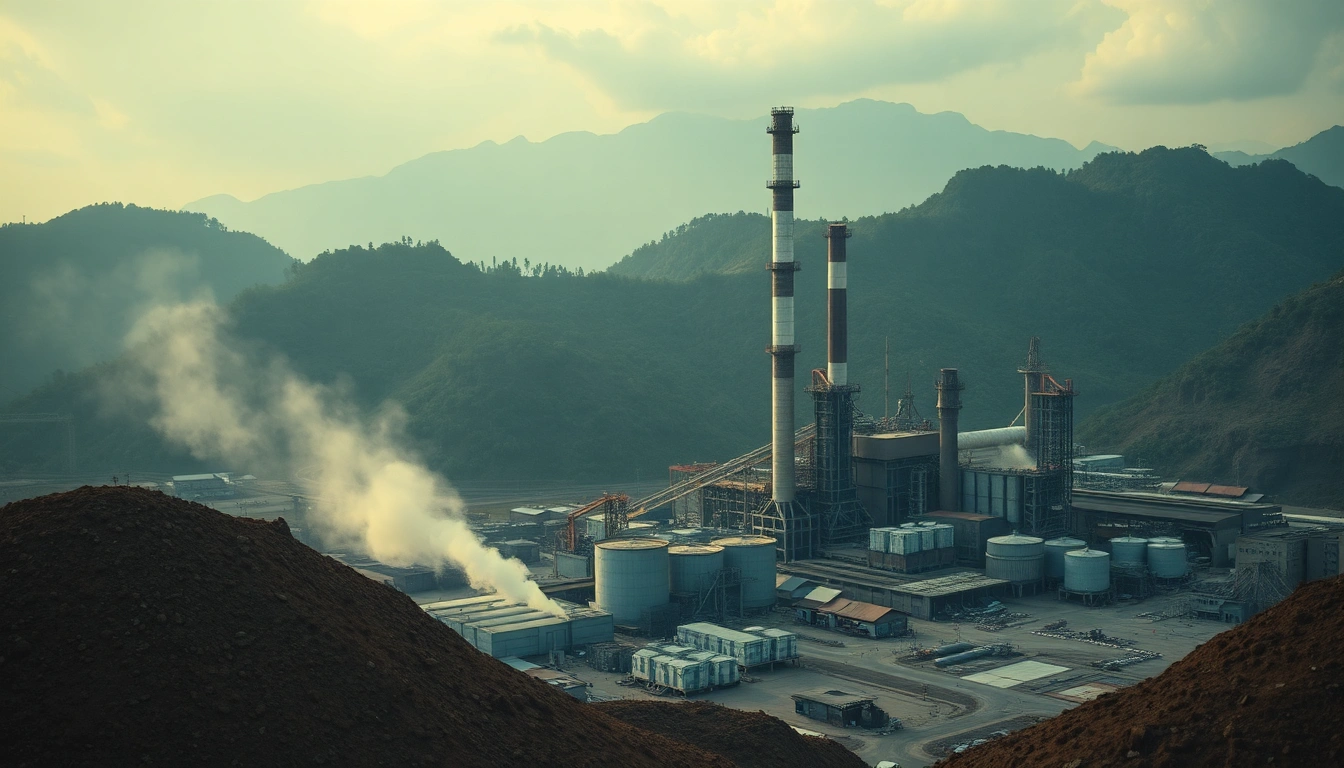
- What Happened: Indonesia's Ministry of Energy and Mineral Resources suspended export licenses for three major tin smelters on November 27, removing an estimated 18,000 tonnes of annual refined tin supply (about 6% of global output) and pushing the semiconductor-grade tin premium to $1,850/tonne.
- Hidden Mechanism: The suspension is tied to a regulatory review of royalty payments and environmental compliance, but the timing coincides with peak restocking demand from semiconductor packaging houses ahead of the holiday season, amplifying the supply shock.
- Capital Transmission: Liquidity is rotating from tin ETFs and mining stocks into refined metal inventories and alternative suppliers like Malaysia Smelting Corporation, while semiconductor firms hedge input costs through forward contracts.
The Supply Shock: Why Indonesia’s License Halt Matters
Indonesia is the world’s second-largest tin producer and a dominant exporter of refined tin, accounting for roughly 22% of global supply. The suspension of export licenses for three smelters—PT Timah, PT Refined Bangka Tin, and PT Mitra Stania Prima—removes about 18,000 tonnes of annual capacity, or 6% of global refined output. For semiconductor packaging, the impact is outsized: high-purity tin (99.99%) is essential for lead-free solder used in advanced chip packages. The premium for 99.99% tin has jumped to $1,850/tonne over the LME cash price, a record, as buyers scramble for non-Indonesian supply.
The catalyst: Indonesia’s government is cracking down on illegal mining and royalty evasion, a move that gained momentum after a corruption scandal in 2025. But the timing is brutal. Semiconductor packaging demand has been running hot, with global semiconductor sales up 12% year-over-year, driven by AI and automotive chips. Packaging houses typically hold only 4-6 weeks of tin inventory, so a disruption of this magnitude quickly tightens the physical market.
The 99.99% Purity Problem: Why You Can’t Just Substitute
Not all tin is created equal. Semiconductor-grade tin requires 99.99% purity, and only a handful of refineries worldwide can achieve that consistently. Indonesia’s smelters are among the few, and their output is prized for low lead and iron content. Substituting with lower-grade tin or recycling is not feasible in the short term—packaging lines are qualified for specific alloys, and re-qualification takes months. This inelasticity means the supply deficit is acute: even if other producers ramp up, they lack the refining capacity to fill the gap quickly.
The Hidden Squeeze: Inventory and Premiums
LME tin inventories have fallen to 4,850 tonnes, down 35% from a year ago and the lowest since 2022. The cash-to-3-month spread has flipped into a $220 backwardation, signaling physical tightness. Meanwhile, the $1,850/tonne premium for 99.99% tin is a tax on semiconductor packaging, which already faces margin pressure from 4.94% Treasury yields and slowing consumer demand. Chipmakers like Intel and TSMC are likely to pass costs downstream, but smaller packaging firms may struggle.
The market is underestimating the second-order effects: Indonesia’s license suspension is not just about tin; it’s a warning shot for other critical minerals where export controls are tightening. Investors should watch for similar regulatory actions in nickel and bauxite, which could amplify supply chain anxieties across the battery and semiconductor complex.
Positioning & Liquidity Map: Who Is Trapped?
Tin miners outside Indonesia, such as Malaysia Smelting Corporation and Peru’s Minsur, are the marginal beneficiaries, but they are already running near capacity. The trapped players are semiconductor packaging firms that have not hedged, and tin ETFs like the iPath Series B Bloomberg Tin Subindex Total Return ETN (ticker: JJT), which cannot easily access physical metal to meet redemption demands. Stop-loss clusters sit near the LME 3-month price of $28,500/tonne; a break below could trigger technical selling, but the physical deficit argues for support. The forced sellers are Indonesian smelters facing regulatory penalties, but they are unlikely to dump inventory due to the license freeze.
Forward Scenarios & Probability Matrix
| Scenario | Implied Probability | Key Trigger / Level | Expected Asset Reaction |
|---|
| Base Case | 55% | License suspension persists for 4-6 weeks; LME tin holds above $28,000 | Tin premium stays elevated at $1,500-$1,850; semiconductor packaging costs rise 2-3% |
| Bullish Tail | 25% | Prolonged halt (3+ months) and restocking demand from China; LME tin breaks $30,000 | Tin price spikes to $32,000; premium exceeds $2,500; refined tin producers rally 15% |
| Bearish Stress | 20% | Indonesia resolves licenses within 2 weeks; deferred supply floods market | Tin price drops to $26,000; premium collapses to $800; packaging stocks rebound |