RBA Holds at 4.10% as Aussie Dollar Tests 0.6480 on Chinese Steel Demand Doubts
2026-11-12, FP360 — The Reserve Bank of Australia kept its cash rate at 4.10% for a third straight meeting, but the Australian dollar slid 0.6% to 0.6480 as Chinese rebar futures fell 2.3% and iron ore dropped below $95/t, exposing the currency's sensitivity to commodity demand. The pause, while expected, underscores the RBA's balancing act between sticky services inflation at 3.8% and a slowing Chinese property sector that absorbs 80% of Australia's iron ore exports.
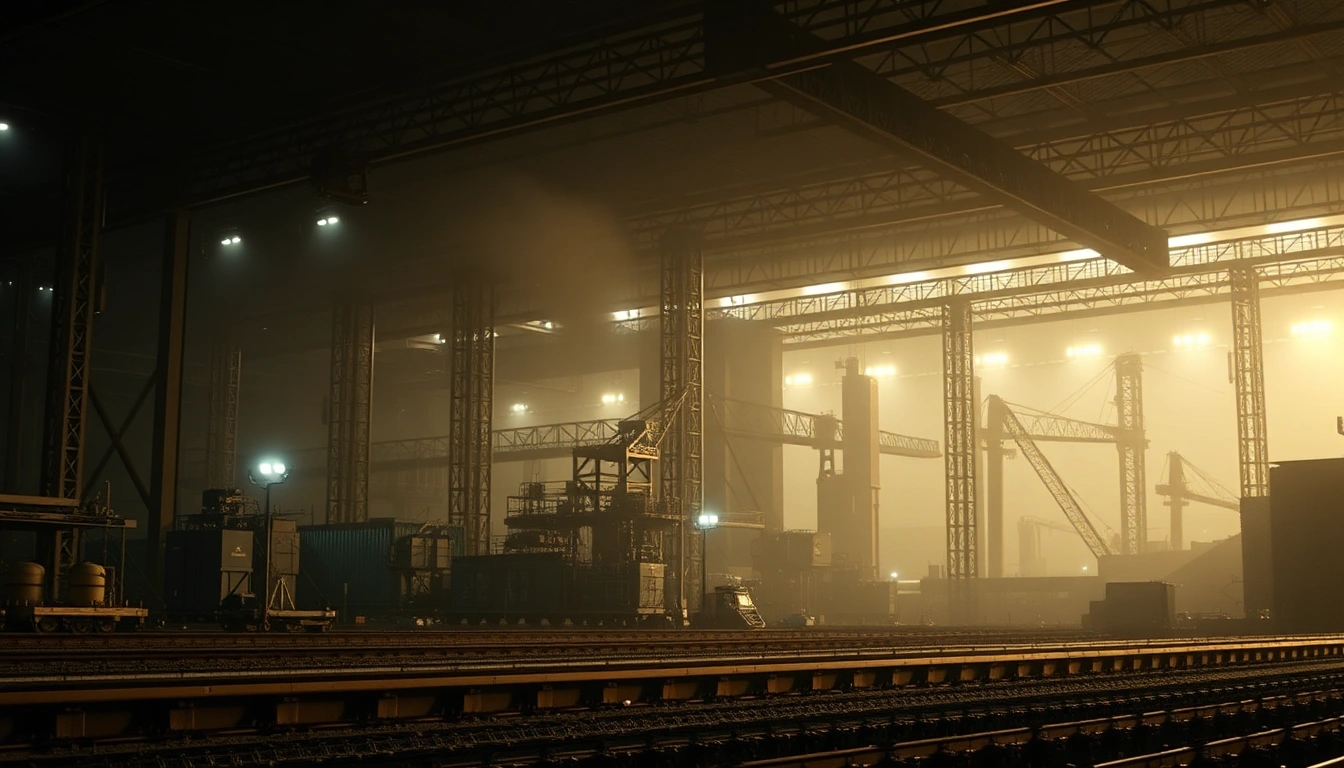
AUD/USD faces further downside if Chinese steel margins stay negative, with 0.6400 as the next psychological support.
A Chinese stimulus surprise targeting infrastructure could lift iron ore and AUD toward 0.6600, especially if the RBA signals a hike bias.
A break below 0.6400 opens the door to 0.6300 as carry trades unwind and commodity exporters hedge future sales.
📄 Read Full Dispatch Intelligence Report (expand)
- What Happened: The RBA held its cash rate at 4.10% on November 12, 2026, but AUD/USD fell 0.6% to 0.6480 as Chinese rebar futures slid 2.3% and iron ore dropped below $95/t, highlighting the currency's vulnerability to Chinese commodity demand.
- Hidden Mechanism: The RBA's pause is not a dovish pivot; it's a tactical hold to assess the lagged impact of 13 rate hikes, while the Australian dollar's fate now hinges on Chinese steel margins, which have turned negative, forcing mills to cut output and reduce iron ore imports.
- Capital Transmission: Liquidity is rotating out of commodity-linked currencies into the US dollar, which is buoyed by a 5.19% 10-year Treasury yield, and into gold at $4,040/oz as a hedge against global growth risks.
Why the RBA Hit Pause: Inflation vs. Growth Tightrope
The RBA's decision to keep the cash rate at 4.10% for a third consecutive meeting was widely expected, but the accompanying statement was less dovish than some hoped. Governor Bullock noted that inflation, while off its peak, remains too high at 3.8% for headline and 4.1% for trimmed mean, and that the labor market is still tight with unemployment at 4.0%. The RBA is essentially saying: we're not hiking because the economy is slowing, but we're not cutting because inflation is sticky. In plain English, the RBA is stuck between a rock and a hard place—raising rates further could tip Australia into recession, but cutting too soon could let inflation expectations become unanchored.
The Aussie Dollar's China Problem: Iron Ore and Steel Margins
The Australian dollar is often viewed as a proxy for Chinese commodity demand, and right now that demand is weakening. Chinese rebar futures, a key indicator of construction activity, fell 2.3% today, while iron ore prices dropped below $95 per tonne, down 15% from their recent peak. The culprit: Chinese steel mills are facing negative margins as property construction remains in the doldrums. In plain English, Chinese steel mills are losing money on every tonne they produce, so they're cutting output and buying less iron ore—and that's bad news for Australia, which supplies about 60% of China's iron ore imports. The Aussie dollar, already pressured by a strong US dollar, is feeling the pain.
The Carry Trade Unwind: Why AUD is Losing Its Yield Advantage
One of the main supports for the Australian dollar in recent years has been its relatively high interest rate compared to other developed economies, making it a favorite for carry traders. But with the RBA on hold and the US Federal Reserve having hiked to 5.50%, the yield advantage has narrowed. The 10-year Australian government bond yield is around 4.80%, while the US 10-year Treasury yield is 5.19%—a 39 basis point premium for US bonds. In plain English, investors can now get paid more to hold US dollars than Australian dollars, so they're selling AUD to buy USD. This carry trade unwind is exacerbating the Aussie's decline.
Positioning & Liquidity Map: Who Is Trapped?
Aussie dollar bulls who bought the currency on expectations of a hawkish RBA are now trapped. Leveraged funds have been net long AUD for six consecutive weeks, according to CFTC data, and stop-loss orders are clustered below 0.6450. If the pair breaks that level, a cascade of selling could accelerate the move toward 0.6400. On the other side, Australian exporters who haven't hedged their future USD earnings are now facing unfavorable rates; they may be forced sellers of AUD if they need to convert USD to fund local costs. The marginal buyer is elusive; with the RBA on hold and Chinese demand weak, there's little incentive to buy AUD unless it becomes oversold.
Forward Scenarios & Probability Matrix
| Scenario | Implied Probability | Key Trigger / Level | Expected Asset Reaction |
|---|---|---|---|
| Base Case | 55% | RBA holds, iron ore stabilizes near $95, AUD/USD trades 0.6450-0.6500 | AUD/USD range-bound, implied vol stays elevated |
| Bullish Tail | 25% | Chinese stimulus announcement lifts iron ore above $100, AUD/USD breaks 0.6550 | AUD/USD rallies to 0.6600, commodity currencies gain |
| Bearish Stress | 20% | Iron ore breaks $90, AUD/USD breaks 0.6400 | AUD/USD targets 0.6300, RBA rate cut expectations rise |
Dorian Reed
Computational Econometrician. Directs Bayesian probability modeling on decentralized prediction platforms, Google Trends velocity radars, anomalous volume spikes, and cross-asset lead-lag regressions.