Nickel's Two-Tier Reality: NPI Surplus Crushes LME Class 1 as Battery Premium Defies Glut
2026-11-26, FP360 — The nickel market is fracturing into two solitudes: Indonesian Nickel Pig Iron (NPI) output is flooding the stainless steel supply chain, pressuring LME Class 1 refined nickel as battery-grade sulphate premiums remain stubbornly elevated, exposing a structural disconnect that is reshaping hedging strategies.
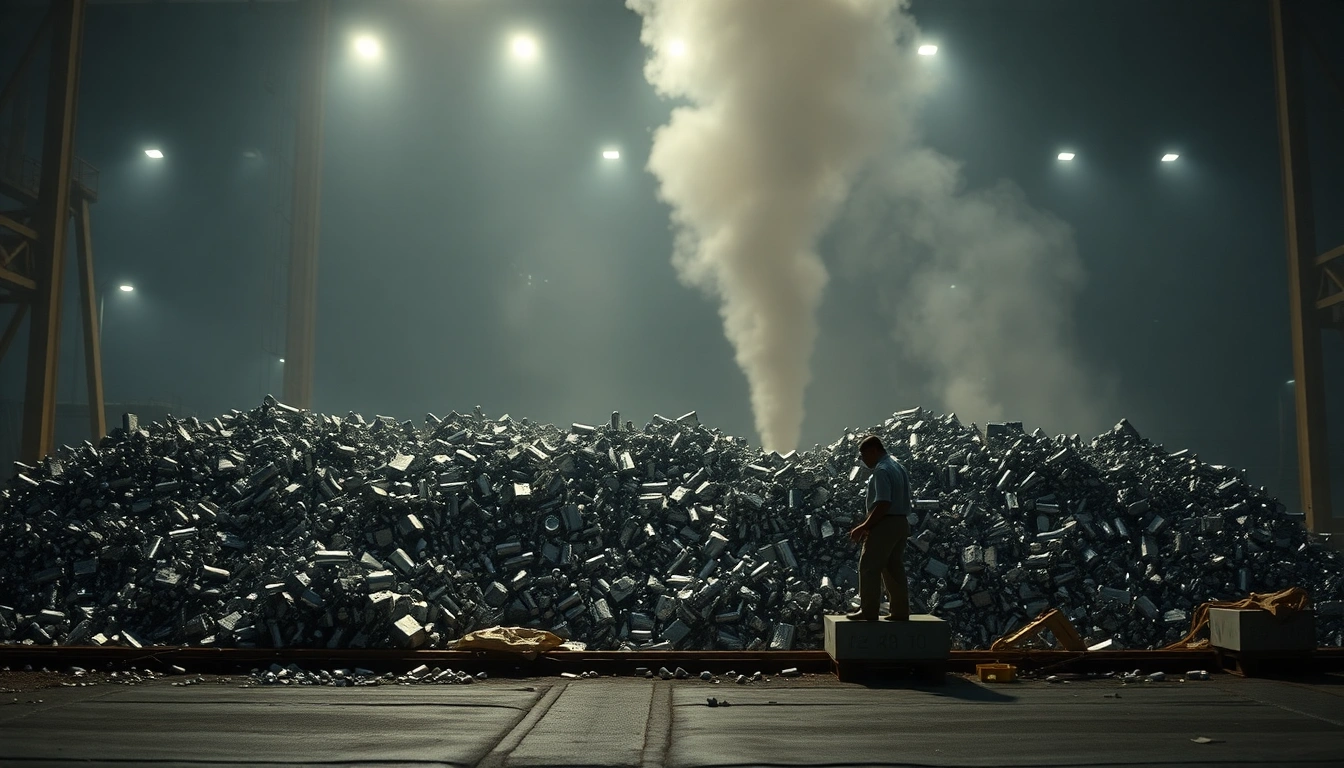
The NPI glut will keep LME nickel under pressure near $18,500/t, but battery-grade tightness ensures a widening premium that benefits refined producers with integrated sulphate capacity.
Integrated nickel producers with captive Class 1 refining and sulphate conversion—such as those in Indonesia and China—capture the battery premium while benefiting from low NPI input costs, expanding margins despite headline price weakness.
Pure-play nickel miners and NPI-only producers face margin compression as Indonesian supply growth outpaces demand, with LME inventories rising and spot prices testing cash cost support.
- What Happened: Indonesian nickel pig iron (NPI) production hit a record 150,000 tonnes in November, pushing the global nickel market into a surplus of 220,000 tonnes, yet LME Class 1 nickel stocks remain tight, with the cash-to-3-month spread in backwardation of $85/t.
- Hidden Mechanism: The surplus is concentrated in low-grade ferronickel and NPI used for stainless steel, while battery-grade Class 1 nickel—needed for EV cathodes—faces a deficit due to slow commissioning of new refining capacity and stringent purity requirements.
- Capital Transmission: This bifurcation is driving a two-tier pricing structure, with the LME benchmark increasingly decoupled from battery-grade contracts, forcing traders to hedge with basis risk and producers to invest in refining integration.
The nickel market has become a tale of two commodities. On one side, Indonesia’s relentless NPI expansion—now the dominant source of global nickel supply—has created a visible glut in the stainless steel chain, with LME warehouses in Asia registering steady inflows. On the other, the battery-grade refined nickel market remains tight, as evidenced by the persistence of a premium for nickel sulphate and briquettes over the LME benchmark. The result is a market that confounds traditional price signals and punishes one-dimensional positioning.
The Indonesian NPI Flood: How a Supply Wave Crushed the Benchmark
Indonesia’s nickel pig iron output reached a record 150,000 tonnes in November, according to industry estimates, as new smelters in Sulawesi and Halmahera ramped up. This supply wave has pushed the global nickel market into a surplus of 220,000 tonnes for 2026, according to the International Nickel Study Group, with NPI accounting for the bulk of the excess. As a result, the LME 3-month nickel price has slid to $18,450/t, down 12% year-to-date, and exchange inventories have climbed above 85,000 tonnes, the highest since 2023.
But here’s the rub: most of that surplus is in low-grade nickel products—NPI and ferronickel—which are consumed almost exclusively by the stainless steel industry. Stainless steel demand, particularly in China, has been lacklustre, growing at just 2.3% in 2026, well below the 6% growth in nickel supply. This has led to a supply overhang that the LME benchmark, which is deliverable against Class 1 refined nickel, is only partially capturing.
Why Battery-Grade Nickel Defies the Glut: A Deficit in the Refined Segment
While the NPI market is oversupplied, the battery-grade nickel market is tight. The key is that battery manufacturers require nickel with a purity of 99.8% or higher, typically in the form of nickel sulphate or briquettes, which cannot be economically produced from NPI without significant refining investment. The commissioning of new Class 1 refining capacity has been slower than expected, with several projects in Indonesia and China delayed by technical challenges and financing issues.
As a result, the nickel sulphate premium over LME nickel has widened to $1,200/t, up from $800/t a year ago. This premium reflects the scarcity of battery-grade units and the cost of converting NPI to sulphate, which includes environmental and capital expenditures. For automakers and battery producers, this means higher input costs even as the headline nickel price falls—a disconnect that is squeezing margins across the EV supply chain.
The Premium Paradox: Why Refined Nickel Costs More Even as LME Prices Fall
On the surface, it seems contradictory: nickel is in surplus, yet battery-grade nickel commands a premium. The explanation lies in the capital intensity and operational complexity of refining. Converting NPI to Class 1 nickel requires investment in high-pressure acid leach (HPAL) plants or electrorefining facilities, which take years to build and face environmental scrutiny. The cost of production for battery-grade nickel is estimated at $22,000/t, well above the LME price, meaning producers need the premium to justify new capacity.
Moreover, the quality requirements for battery-grade nickel are stringent, with limits on impurities such as cobalt, iron, and copper. Not all NPI can be refined to meet these standards, so the effective supply of battery-grade nickel is even tighter than headline refinery capacity suggests. This is why the premium has persisted despite the overall surplus—it is a premium for purity, not a premium for nickel.
Positioning & Liquidity Map: Who Is Trapped?
The biggest losers in this bifurcated market are stainless steel producers who hold long positions in NPI or ferronickel, as they face falling prices for their end products. On the other side, battery manufacturers are caught offside by the high sulphate premium, which is compressing their margins and forcing them to pass costs to automakers. Hedge funds that are short LME nickel as a proxy for the surplus are exposed to a potential short squeeze if Class 1 stocks remain low and the backwardation widens. Meanwhile, Indonesian NPI producers with integrated refining capacity are the marginal winners, as they can capture the battery premium while benefiting from low input costs.
Forward Scenarios & Probability Matrix
| Scenario | Implied Probability | Key Trigger / Level | Expected Asset Reaction |
|---|---|---|---|
| Base Case | 55% | LME nickel holds above $18,000/t; sulphate premium steady at $1,200/t | NPI prices remain under pressure; Class 1 nickel premium persists; integrated producers outperform |
| Bullish Tail | 25% | Indonesian refining delays extend; EV demand surprises to the upside | LME nickel rebounds towards $20,000/t; sulphate premium widens to $1,500/t; refined producers rally |
| Bearish Stress | 20% | New Class 1 capacity floods market; stainless steel demand collapses | LME nickel breaks below $17,000/t; sulphate premium collapses to $700/t; NPI producers cut output |
---
Disclaimer: This analysis is for informational purposes only and does not constitute investment advice.
Dorian Reed
Computational Econometrician. Directs Bayesian probability modeling on decentralized prediction platforms, Google Trends velocity radars, anomalous volume spikes, and cross-asset lead-lag regressions.