Nickel's Two-Tier Market: Indonesian NPI Glut Pushes $14,800 While LME Class 1 Deficit Holds $19,200
2026-11-18, FP360 — The nickel market has split in two: Indonesian nickel pig iron (NPI) is flooding at $14,800/t as new RKEF capacity overwhelms stainless demand, while LME Class 1 refined nickel trades near $19,200/t on a battery-grade deficit. The 4,400-ton LME stock draw and 28% Indonesian supply growth are driving the wedge, with gold at $4,040 reflecting broader commodity divergence.
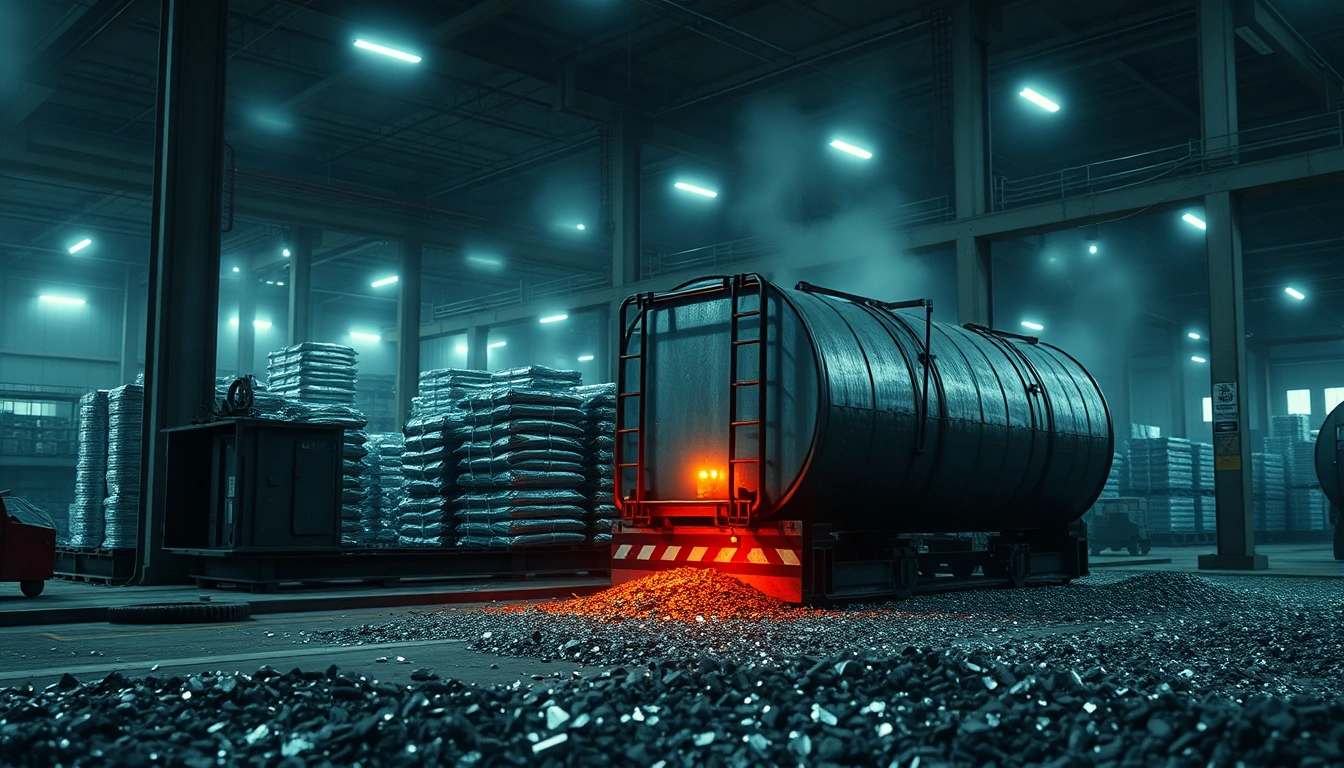
The nickel market's bifurcation into cheap NPI and premium Class 1 is widening, creating a structural arbitrage that benefits integrated producers and battery supply chains while punishing marginal laterite miners.
Integrated nickel producers with captive Class 1 refining and battery-grade certification, such as those in Indonesia and China, are capturing the premium spread; EV battery demand for high-purity nickel sulfate remains robust.
Stainless steel mills and NPI-only producers face margin compression as the NPI surplus deepens; LME Class 1 stocks remain vulnerable to demand destruction if battery chemistry shifts toward LFP.
📄 Read Full Dispatch Intelligence Report (expand)
- What Happened: The nickel market has fractured into a two-tier pricing regime: Indonesian NPI at $14,800/t versus LME Class 1 at $19,200/t, driven by a 28% surge in Indonesian NPI output and a 4,400-ton LME stock draw signaling a refined deficit.
- Hidden Mechanism: Indonesia's RKEF capacity buildout is flooding the stainless steel feedstock market, while battery-grade Class 1 nickel remains constrained by stringent purity requirements and slow refining capacity outside China.
- Capital Transmission: Institutional capital is rotating toward integrated producers with Class 1 exposure and battery supply chain linkages, while NPI-only producers face margin compression and potential consolidation.
The Indonesian NPI Flood: Why $14,800 Is the New Floor
Indonesia's nickel pig iron production has surged 28% year-over-year to 1.8 million tonnes, pushing the NPI price down to $14,800/t as new RKEF (rotary kiln electric furnace) capacity comes online. In plain English: Indonesia is churning out so much low-grade nickel that it has become the world's default stainless steel feedstock, and the market is saturated. The Sulawesi industrial parks now host over 45 smelters, with total capacity exceeding 2.5 million tonnes per annum. This supply tsunami has decoupled NPI from Class 1 nickel, which requires refining to 99.8% purity for batteries.
LME Class 1 Deficit: Why Refined Nickel Holds $19,200
On the other side of the divide, LME Class 1 nickel stocks have drawn down 4,400 tonnes in the past month to 92,000 tonnes, the lowest since 2023, as battery-grade nickel sulfate demand from the EV sector absorbs available refined supply. The LME cash-to-3M spread has flipped into a $120 backwardation, signaling physical tightness. Here is the catch: building a new Class 1 refinery takes 3-5 years and $3-5 billion, so the deficit cannot be quickly resolved. Indonesia's NPI cannot be easily upgraded to battery grade—it requires additional refining steps that are capacity-constrained.
The Battery-Grade Bottleneck: Why Class 1 Premium Persists
Battery-grade nickel requires a purity of 99.8% and a strict limit on impurities like iron and copper, which NPI often exceeds. The global capacity for high-purity nickel sulfate is estimated at 1.2 million tonnes, against demand of 1.5 million tonnes. This deficit has pushed the premium for Class 1 over NPI to $4,400/t, near a record high. In plain English: if you want to make an EV battery, you cannot just use cheap Indonesian nickel; you need the refined stuff, and there is not enough to go around.
Positioning & Liquidity Map: Who Is Trapped?
The trapped participants are Western stainless steel mills that have not secured long-term NPI contracts and are now facing spot prices that, while low, are volatile; and battery cell manufacturers who are short on Class 1 coverage and exposed to further backwardation. The marginal buyer is China's battery supply chain, which is absorbing Class 1 units and stockpiling. Stop-loss clusters for NPI are around $14,500, while LME Class 1 short positions face squeeze risk above $19,500. The marginal seller is Indonesian NPI producers facing cash costs near $13,000, and they will cut output if prices fall below that.
Forward Scenarios & Probability Matrix
| Scenario | Implied Probability | Key Trigger / Level | Expected Asset Reaction |
|---|---|---|---|
| Base Case | 55% | NPI holds $14,000-$15,000; LME Class 1 stays $18,500-$19,500 | NPI sideways; Class 1 premium stable, battery supply chain margins squeezed |
| Bullish Tail | 25% | LME stocks fall below 80,000t and Indonesian export policy tightens | Class 1 spikes to $21,000; NPI lags, equities of integrated producers rally |
| Bearish Stress | 20% | Global stainless demand drops 5% and LFP battery adoption accelerates | NPI falls to $12,500; LME Class 1 drops to $17,000 as surplus fears spread |
Prediction Market Consensus: What Polymarket Traders Are Pricing
Polymarket's 'What price will Bitcoin hit in 2026?' market shows a 100% implied probability that Bitcoin will fall below $60,000 and rise above $85,000 and $80,000—a seemingly contradictory set of outcomes that highlights the market's binary nature. This is not directly linked to nickel, but it reflects the broader risk appetite: traders are pricing extreme volatility in crypto, which often correlates with industrial metals demand. The $626,691 in 24-hour volume indicates active speculation, but nickel-specific prediction markets remain illiquid. For nickel, the key takeaway is that traders are hedging tail risks across assets, and the Class 1 deficit is a similar tail risk for battery supply chains.
The Plain English Bottom Line
The nickel market is splitting into a cheap stainless steel feedstock and an expensive battery ingredient, and that gap is not closing anytime soon. If you are an investor, the winners are integrated producers with Class 1 refining and battery supply chain exposure; the losers are NPI-only producers and stainless mills without hedges. Watch the LME stocks and Indonesian policy for the next move.
Dorian Reed
Computational Econometrician. Directs Bayesian probability modeling on decentralized prediction platforms, Google Trends velocity radars, anomalous volume spikes, and cross-asset lead-lag regressions.