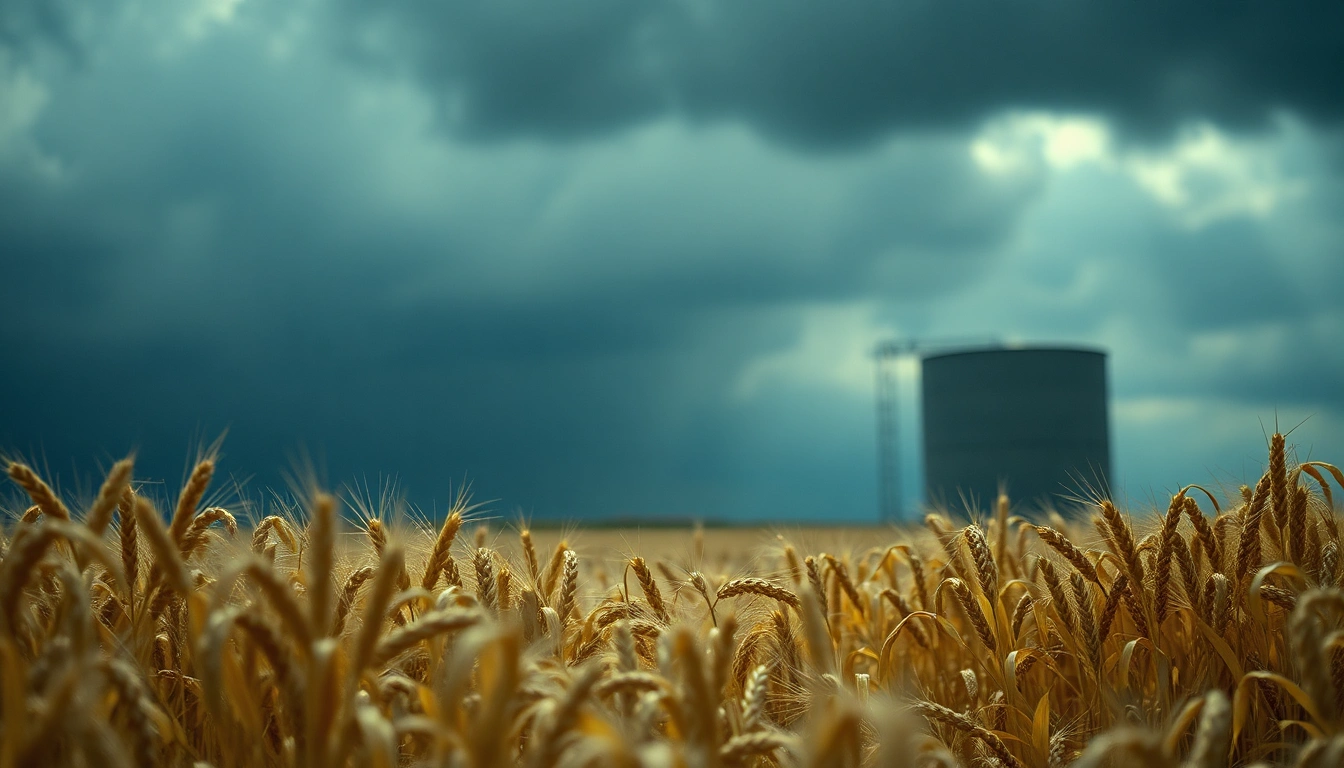
- What Happened: Weather volatility across key grain and soft commodity belts — wheat, corn, sugar, coffee — is tightening 2026/27 harvest outlooks, while the US 10-year yield at 4.92% raises the cost of carrying physical inventory.
- Hidden Mechanism: Elevated financing costs mean every bushel and tonne held in storage now carries a heavier interest penalty, so farmers and merchants are quicker to sell rallies and slower to build speculative stock.
- Capital Transmission: Liquidity is rotating toward shorter-duration ag plays and inflation hedges like gold at $3,616/oz, while leveraged long positions in softs face roll and margin pressure.
The Weather Premium Meets a 4.92% Carry Tax
Grain and soft commodity markets are pricing two forces at once: real harvest uncertainty from volatile weather patterns across the Americas, Black Sea, and Southeast Asian sugar and coffee belts, and the cold arithmetic of financing inventory at a 4.92% 10-year Treasury yield. The result is a market that wants to rally on every dry spell and freeze warning but keeps bumping into the cost of carry.
In plain English, when the government's benchmark borrowing rate sits near 4.9%, every warehouse operator and farmer faces a higher interest bill to sit on product. That is a carry tax on inventory, and it changes behavior: sell rallies faster, hedge more aggressively, and hold less speculative stock. Weather headlines alone no longer produce the sustained trend rallies of a low-rate era.
Why Grain Prices Are Falling Even When Harvest News Is Bad
A rally that fades on good weather news but also fails to hold on bad weather news is the signature of a carry-driven market. Traders are asking why grain and soft prices fall despite supply worries, and the answer is financing. With WTI crude at $81.14/bbl, input and freight costs remain elevated, while a firm dollar and 4.92% yield make US-origin exports less competitive and storage more expensive. When the cost of holding rises, the curve's shape rewards selling nearby strength rather than chasing it.
The Global Price Map: From India to Nepal to the US
Gold is not the only commodity where global price differences matter. Grain and soft commodity pricing varies by local duty structures, freight, and currency. In the US, domestic wheat and corn basis reflects a strong dollar and high storage costs. In India, import duties and MSP policy keep local grain prices sticky even as global futures swing. In Nepal and other import-dependent markets, currency weakness and logistics costs amplify global moves. The common thread: weather volatility transmits through local FX and trade policy into consumer food prices, which is why food-inflation expectations are creeping back into central bank commentary.
The real pressure on grains and softs is not the weather — it is the opportunity cost of inventory in a 4.92% yield world. When a risk-free T-bill yields 4.34%, holding a speculative grain position must clear a high hurdle. Standard media coverage misses that this is a capital-allocation story, not just an agronomy story. Funds would rather earn 4.34% in T-bills than finance a volatile softs position, so rallies get sold into and volatility stays contained — until a genuine supply shock forces short-covering that overwhelms the carry trade.
Positioning & Liquidity Map: Who Is Trapped?
Farmers who deferred selling are trapped between weather uncertainty and a curve that penalizes storage; they are likely to sell into any weather rally. Speculative funds are caught offside on crowded long positions in wheat and softs, exposed to roll costs and margin pressure if the dollar strengthens further. The marginal buyer is a processor or end-user hedging real demand, not a speculative trend-follower. Stop-loss clusters sit below recent consolidation zones in corn and wheat, where a break could trigger liquidation. Meanwhile, gold at $3,616/oz remains the preferred macro hedge for the same inflation impulse, and Bitcoin at $63,791 — with Polymarket's 100% implied odds of touching $80,000 — shows speculative capital is chasing crypto upside rather than ag volatility.
Forward Scenarios & Probability Matrix
| Scenario | Implied Probability | Key Trigger / Level | Expected Asset Reaction |
|---|
| Base Case | 55% | Weather normalizes; US10Y holds 4.92% | Grains and softs range-bound; rallies sold into |
| Bullish Tail | 25% | La Niña escalation or major harvest downgrade | Wheat and sugar spike 8–12%; short-covering amplifies move |
| Bearish Stress | 20% | Strong dollar and 4.92% yield accelerate farmer selling | Corn and wheat test support; funds liquidate longs |
The Bottom Line for Traders
Weather volatility is a genuine supply-risk story, but the 4.92% yield is the gravity that keeps grain and soft commodity rallies honest. Until a real supply shock forces short-covering, expect rallies to be sold and volatility to stay contained. Watch the dollar, the 10-year yield, and harvest updates — and remember that in a high-carry world, the cost of holding is the trade.