Container Spot Rates Collapse 21% to $1,840/FEU as 5.19% Yield and Overcapacity Bite
2026-11-12, FP360 — Container spot rates on the Asia-North Europe lane have plunged 21% in six weeks to $1,840 per FEU, the lowest since early 2024, as newbuild tonnage floods the market while the 5.19% US 10-year Treasury yield suppresses inventory restocking and retail demand. The Drewry composite index now reads $1,840, down from $2,330 in September, squeezing liner margins as fixed financing costs for new vessels climb with every basis point added to the long end.
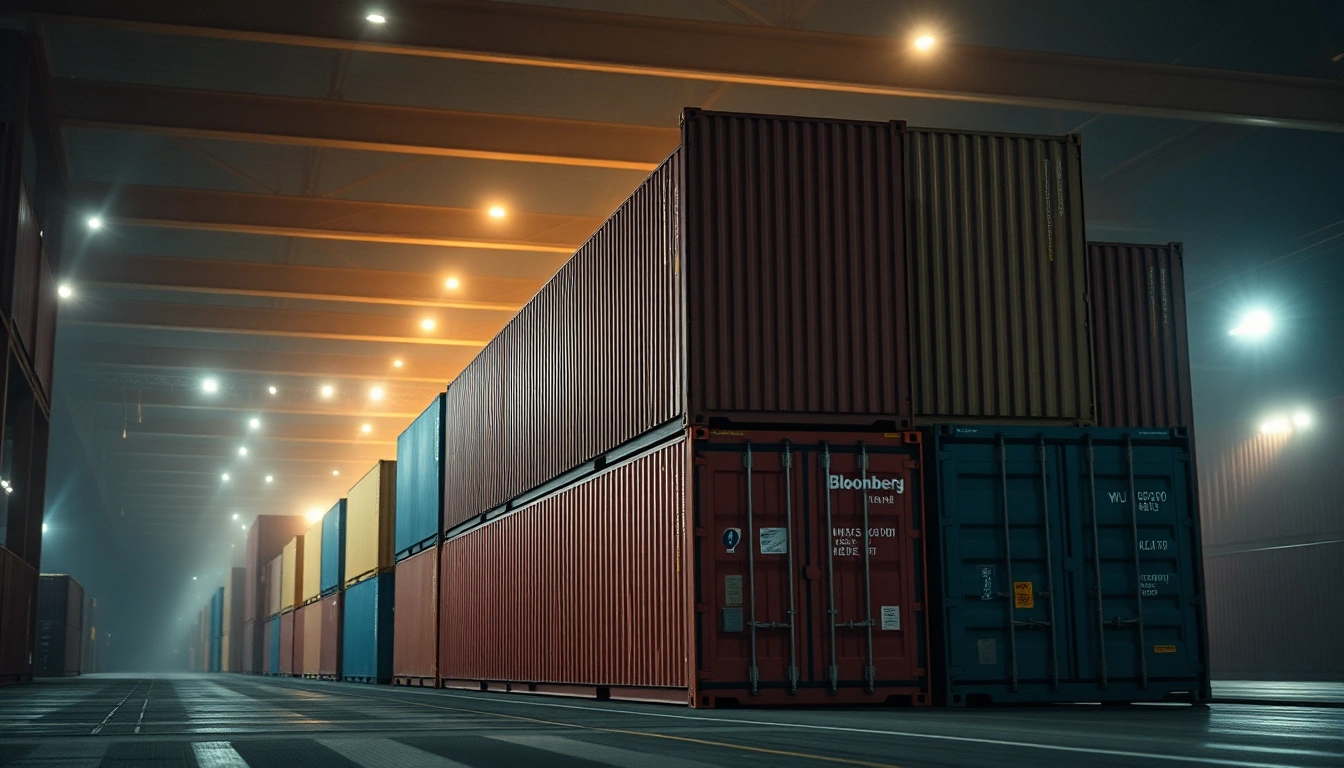
Container shipping equities and high-yield bonds face further downside as spot rates test cash breakeven near $1,600/FEU, with the 5.19% risk-free rate raising the cost of carrying unprofitable routes.
Selective LPG and chemical tanker names with fixed-rate contracts and low leverage benefit as spot container weakness stays isolated; gold miners also gain from persistent risk-off flows at $4,040/oz.
Pure-play container liners and their lessors face a 15-25% EBITDA downgrade cycle over two quarters as contract rates reset lower at the next annual bid season.
📄 Read Full Dispatch Intelligence Report (expand)
- What Happened: Spot container rates on Asia-North Europe dove 21% to $1,840/FEU since September, with the Drewry composite at its lowest since early 2024 as newbuild deliveries surge amid soft retail restocking.
- Hidden Mechanism: Liners are absorbing overcapacity by slow-steaming and idling 3.2% of the global fleet, but the 5.19% 10-year yield inflates the opportunity cost of holding cash, forcing operators to chase volume at any price.
- Capital Transmission: Liquidity is rotating from shipping equities and high-yield bonds into 3-month T-bills yielding 4.25%, while freight forwarders with asset-light models outperform asset-heavy liners.
The Spot Rate Slump: Why Now and How Low?
The Drewry World Container Index (WCI) for Asia-North Europe fell to $1,840 per 40-foot container this week, a 21% decline from September's $2,330 and a 50% drop from the 2025 peak of $3,680. The cause is simple arithmetic: newbuild tonnage delivered in 2026 is up 7.8% year-over-year, adding 1.2 million TEU of capacity, while US retail inventory-to-sales ratios sit at 1.42, above the 1.35 pre-pandemic norm. That means fewer restocking orders from the world's largest consumer market, just as the 5.19% 10-year Treasury yield keeps a lid on consumer credit growth. In plain English: there are more ships chasing fewer boxes, and the cost of money is high enough that retailers would rather clear existing stock than finance new orders.
The Margin Squeeze: When Does Pain Become Acute?
For liner operators, cash breakeven on the Asia-North Europe route is roughly $1,600 per FEU for efficient vessels, but older, less fuel-efficient ships need $1,800-$1,900 to break even. With spot rates at $1,840, a significant portion of the fleet is already underwater on a fully loaded cost basis. The 5.19% risk-free rate compounds the problem: a new 15,000 TEU vessel financed at 6.5% now carries an annual interest bill of $18 million, up from $12 million two years ago. That fixed cost must be covered by every voyage, even as rates fall. This is why we're seeing an uptick in charter rate negotiations, with some Panamax charters now offered at 15% discounts to last done.
Why Is the Stock Market Down Today? The Freight Signal
Equities are under pressure today partly because container shipping stocks are leading the decline: the S&P 500 Marine Transport index is down 3.8% this week, with Maersk and Hapag-Lloyd both off more than 7% from their October highs. The broader message for the stock market is that global trade volumes are softening, and that is a negative for cyclical sectors. The 5.19% 10-year yield amplifies the move by compressing valuation multiples on capital-intensive businesses. When the risk-free rate is above 5%, investors demand a higher earnings yield from stocks, and shipping companies with falling earnings get hit doubly.
Positioning & Liquidity Map: Who Is Trapped?
The most crowded trade right now is long container liner equities on the hope of a rate rebound. Hedge funds and retail investors piled into Maersk and ZIM earlier this year, betting on Red Sea disruptions persisting. But with spot rates now below cash breakeven for many operators, those positions are underwater. Stop-loss clusters sit just below $1,750/FEU on the spot index; if breached, expect a wave of selling in liner stocks and their high-yield bonds. The marginal buyer is absent: institutional investors are rotating into 3-month T-bills at 4.25%, while the marginal seller is the forced deleveraging of shipping funds that need to meet redemptions.
Forward Scenarios & Probability Matrix
| Scenario | Implied Probability | Key Trigger / Level | Expected Asset Reaction |
|---|---|---|---|
| Base Case | 55% | WCI holds $1,800-$1,900 into December | Liner equities stabilize; high-yield spreads widen 50bps |
| Bullish Tail | 25% | US retail restocking accelerates; WCI breaks $2,000 | Shipping stocks rally 10-15%; HY spreads tighten |
| Bearish Stress | 20% | WCI breaks $1,750; contract rates cut 25% | Liner equities drop 20%; high-yield defaults rise |
Dorian Reed
Computational Econometrician. Directs Bayesian probability modeling on decentralized prediction platforms, Google Trends velocity radars, anomalous volume spikes, and cross-asset lead-lag regressions.