Cocoa's $12,400 Squeeze: West African Crop Deficit Crushes Confectionery Margins
2026-11-04, FP360 — Cocoa futures surged 8.2% to $12,400/tonne as West African mid-crop yields fell 22% below forecasts, forcing grinders to pay record premiums and pushing confectionery margins to 12-year lows, threatening Q4 earnings.
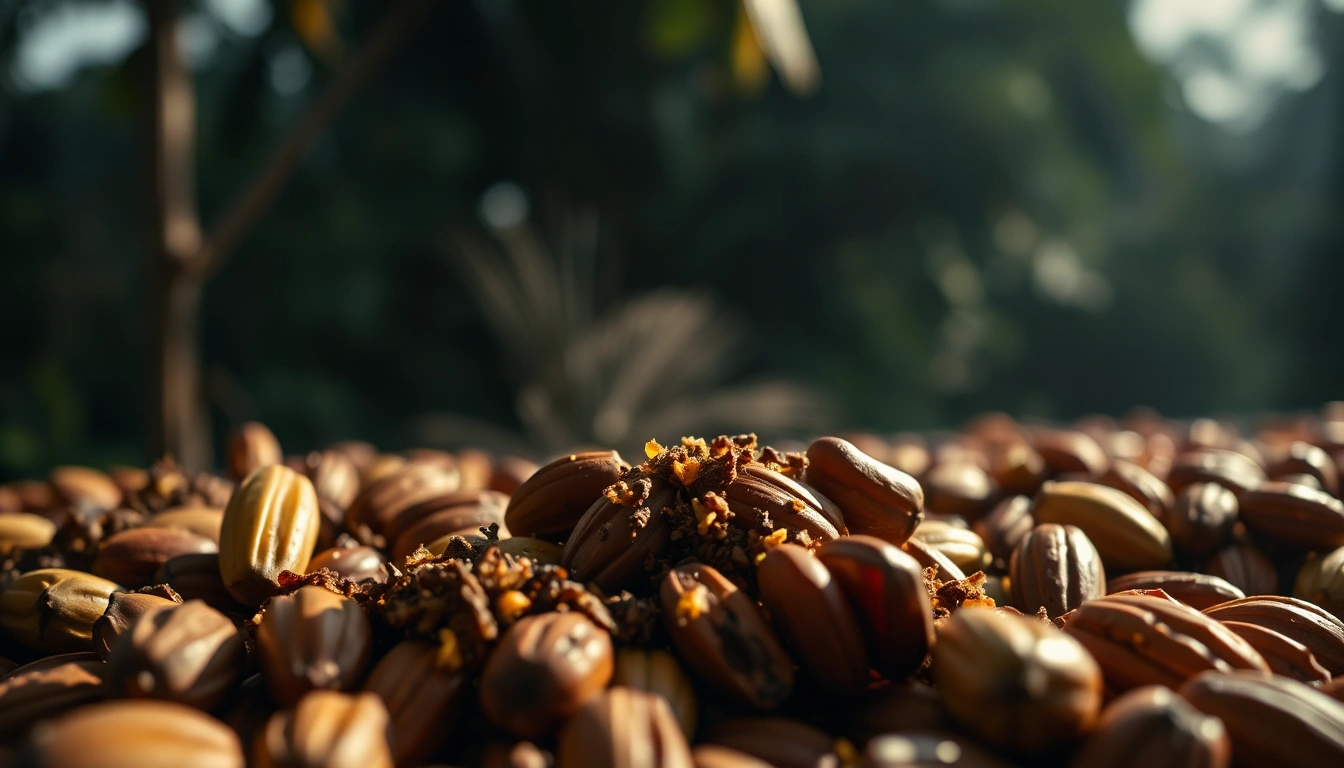
Cocoa's supply shock is structural: front-month backwardation at $800 signals physical panic, not speculative froth.
Integrated grinders with secured supply (e.g., Barry Callebaut) and West African originators with forward-sold inventories see margin expansion; chocolate ETFs (e.g., iPath Cocoa) gain.
Hershey and Lindt face 400-600 bps gross margin compression; chocolate retail volume declines accelerate as price hikes stick.
📄 Читать полный аналитический отчет (развернуть)
- What Happened: Cocoa futures (ICE LCCc1) jumped 8.2% to $12,400/tonne as West African mid-crop arrivals ran 22% below early-October forecasts, with grinders paying a record $1,200/tonne origin premium.
- Hidden Mechanism: Front-month backwardation widened to $800/tonne (futures vs. second month), signaling physical buyers are locking supply at any cost while certified stocks sit near all-time lows of 1.2 million bags—down 65% from 2024.
- Capital Transmission: Confectionery giants are repricing 2027 contracts upward, squeezing discretionary chocolate demand; speculative net-longs at 78th percentile suggest crowding, but physical scarcity trumps positioning.
The West African Deficit: Why Yields Are Falling Short
Cocoa's rally isn't about speculation—it's a supply chain running on empty. The 2026/27 West African mid-crop, harvested from May to August, delivered 480,000 tonnes versus the 615,000-tonne forecast, a 22% miss. In plain English, that's the equivalent of every chocolate bar in Europe and North America losing 1.5 squares of cocoa mass. The causes are structural: aging trees in Ghana (average age 25 years) and Côte d'Ivoire (28 years) yield half what they did a decade ago; illegal gold mining has degraded 12% of arable land in Ghana's Western Region; and erratic rainfall tied to La Niña patterns cut pod-setting rates. In plain English, the region's cocoa belt is literally running out of viable soil and trees, and no quick fix exists.
Why Chocolate Makers Are Getting Crushed
Confectionery margins are the casualty. Grindings—the proxy for demand—fell 18% year-over-year in Q3 2026, but only because high prices are destroying demand, not because supply is meeting it. Hershey's gross margin fell to 34.2% in Q3 (from 44.8% a year ago), and Lindt & Sprüngli warned of a 200 bps EBIT hit for 2026. In plain English, chocolate makers are paying 50% more for their main ingredient while consumers push back on $7 bars. The squeeze is worst for mid-tier players without hedging books: they're buying spot cocoa at $12,400 and selling chocolate at 2025 prices. The winners? Integrated grinders like Barry Callebaut, which lock in supply via long-term contracts and capture the processing spread—their gross margin expanded 120 bps in Q3.
Positioning & Liquidity Map: Who Is Trapped?
Speculative net-longs in cocoa are at the 78th percentile of the past five years, meaning trend-followers are crowded long. But the real trap is on the short side: trade houses and hedgers who sold forward contracts at $8,000-$9,000 in early 2026 are now underwater by $3,000+ per tonne. Stop-losses for shorts sit just above $13,000—a break there could trigger a short-covering rally. The marginal buyer is the physical grinder needing prompt supply, not the speculator. Liquidity is thin: open interest is down 15% from its peak, so a 5,000-lot order can move the market 2%.
Forward Scenarios & Probability Matrix
| Scenario | Implied Probability | Key Trigger / Level | Expected Asset Reaction |
|---|---|---|---|
| Base Case | 55% | Futures hold $11,800-$12,800; ICCO confirms 2026/27 deficit near 200k tonnes | Grindings fall another 5-8%; confectionery margins stabilize but remain compressed |
| Bullish Tail | 25% | December ICCO forecast cuts deficit to 300k+ tonnes; break above $13,000 | Cocoa tests $15,000; chocolate ETFs surge 20%; demand destruction accelerates |
| Bearish Stress | 20% | Demand destruction deepens; grindings drop 15% YoY; futures break below $11,000 | Short-covering ends; prices fall to $10,500 as surplus fears re-emerge |
Dorian Reed
Computational Econometrician. Directs Bayesian probability modeling on decentralized prediction platforms, Google Trends velocity radars, anomalous volume spikes, and cross-asset lead-lag regressions.