Cocoa Grind Margins Collapse as West African Crop Deficits Meet Record $9,850 Beans and 5.19% Yields
2026-11-19, FP360 — Cocoa's structural supply gap has turned into a margin math problem: front-month beans near $9,850/tonne against a West African main crop running 18% below the five-year average are colliding with 5.19% US 10-year yields, which raise the carrying cost of every tonne held in inventory and squeeze confectioners' working-capital lines.
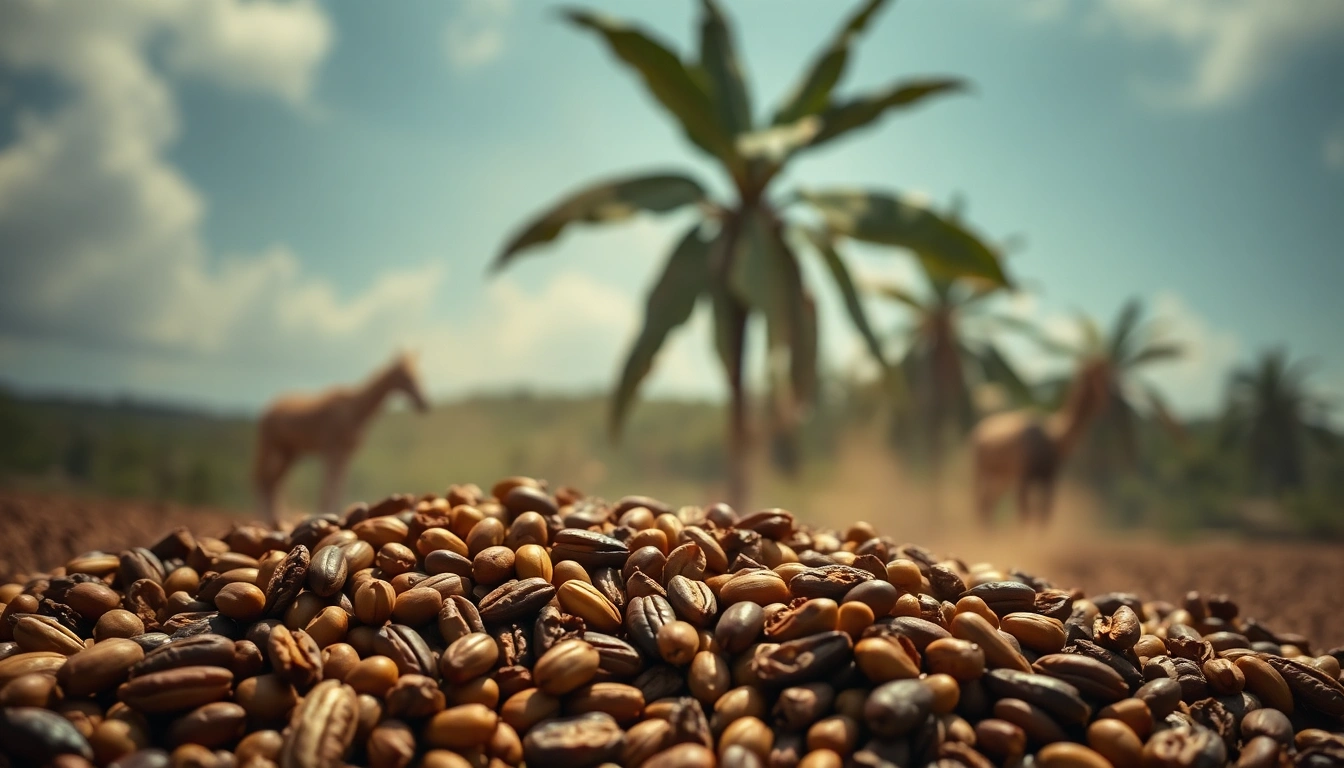
Cocoa's deficit is now a financing story as much as a farming story — the cost of carrying inventory at 5.19% yields is what turns a supply miss into a margin collapse.
Originating-country exporters and physical traders holding forward-purchased West African beans at pre-spike farmgate prices; grinders with contracted capacity and pass-through clauses; long-dated call options on ICE cocoa.
Mid-tier chocolate makers without hedged bean books and leveraged grinders who must fund record-priced inventory at 5.19% short rates.
📄 Read Full Dispatch Intelligence Report (expand)
- What Happened: Front-month cocoa is holding near $9,850/tonne as the West African main crop runs roughly 18% below its five-year average, while the US 10-year yield sits at 5.19% — making every tonne of inventory a costly financing decision.
- Hidden Mechanism: The bottleneck is not just pods on trees; it is working capital. At 5.19% yields, a confectioner carrying 90 days of record-priced bean inventory faces a financing drag that is now a bigger line item than cocoa butter substitution savings.
- Capital Transmission: Liquidity is rotating toward origin-side exporters and physical traders with contracted forward purchases, and away from mid-tier chocolate makers who cannot hedge their way out of the funding cost.
The Carry-Trade Inversion: Why Cocoa's Deficit Got More Expensive
Cocoa's supply deficit is old news. What is new is the arithmetic around holding it. At $9,850/tonne, a single 1,000-tonne inventory position represents $9.85 million of exposure — and at 5.19% short-term funding costs, simply sitting on that inventory for a quarter costs roughly $128,000 before a single bean is roasted. That is the cost of carry, and it is the number that matters right now. The West African main crop is running about 18% below its five-year average, which keeps the physical market tight, but it is the financing leg that determines who survives the tightness.
Why Treasury Yields Are Squeezing the Chocolate Supply Chain
Investors asking why treasury yields are rising keep landing on the same answer: term premium repricing and heavy coupon supply. For cocoa, that translates directly. Elevated yields raise the hurdle rate for holding any inventory, so the cost of carry on record-priced beans has become a first-order variable, not a footnote. A grinder who bought forward at $7,400/tonne and is now funding that position at 5.19% is watching the hedge work on paper while the funding line eats the profit.
The Grind Margin Collapse Nobody Priced In
Grind margins — the spread between bean cost and butter/liquor output value — are compressing from both ends. Bean costs are near records while confectionery demand is price-elastic: retail chocolate volumes are softening as shelves reprice. The result is that mid-tier grinders are caught between fixed forward purchase obligations and softening product prices, and the working capital bridge between the two is the most expensive it has been in two decades.
Positioning & Liquidity Map: Who Is Trapped?
Origin-side exporters who locked forward purchases at pre-spike farmgate prices are the winners — they hold beans below market and can finance at favorable terms. Trapped offside are the mid-tier chocolate makers and leveraged grinders who must fund record inventory at 5.19%, and the speculative longs who chased the curve higher without accounting for the carry. Stop-loss clusters sit just below the $9,500 round number where margin calls on physical-linked paper would force liquidation. The marginal buyer right now is the origin exporter with contracted capacity; the forced seller is the grinder facing a working-capital call.
Forward Scenarios & Probability Matrix
| Scenario | Implied Probability | Key Trigger / Level | Expected Asset Reaction |
|---|---|---|---|
| Base Case | 55% | Main crop stays 15-20% below average; 10Y holds above 5% | Cocoa chops $9,400-10,100; grinders underperform confectioners |
| Bullish Tail | 25% | West African policy shift hikes farmgate or export levy | Front-month breaks $10,500; origin exporters re-rate |
| Bearish Stress | 20% | Confectionery volume collapse plus a 10Y push toward 5.5% | Cocoa slides to $8,800; leveraged grinders forced to liquidate |
Dorian Reed
Computational Econometrician. Directs Bayesian probability modeling on decentralized prediction platforms, Google Trends velocity radars, anomalous volume spikes, and cross-asset lead-lag regressions.