Central Banks Add 1,200 Tonnes of Gold in 2026, Reshaping Global Reserves
2026-10-30, FP360 — Central bank gold purchases hit a record 1,200 tonnes in 2026, driven by de-dollarization and reserve diversification, pushing gold to $3,850/oz, up 32% year-to-date. This surge reflects a structural shift in global reserves, with emerging markets leading the charge, impacting gold miners, the dollar, and liquidity.
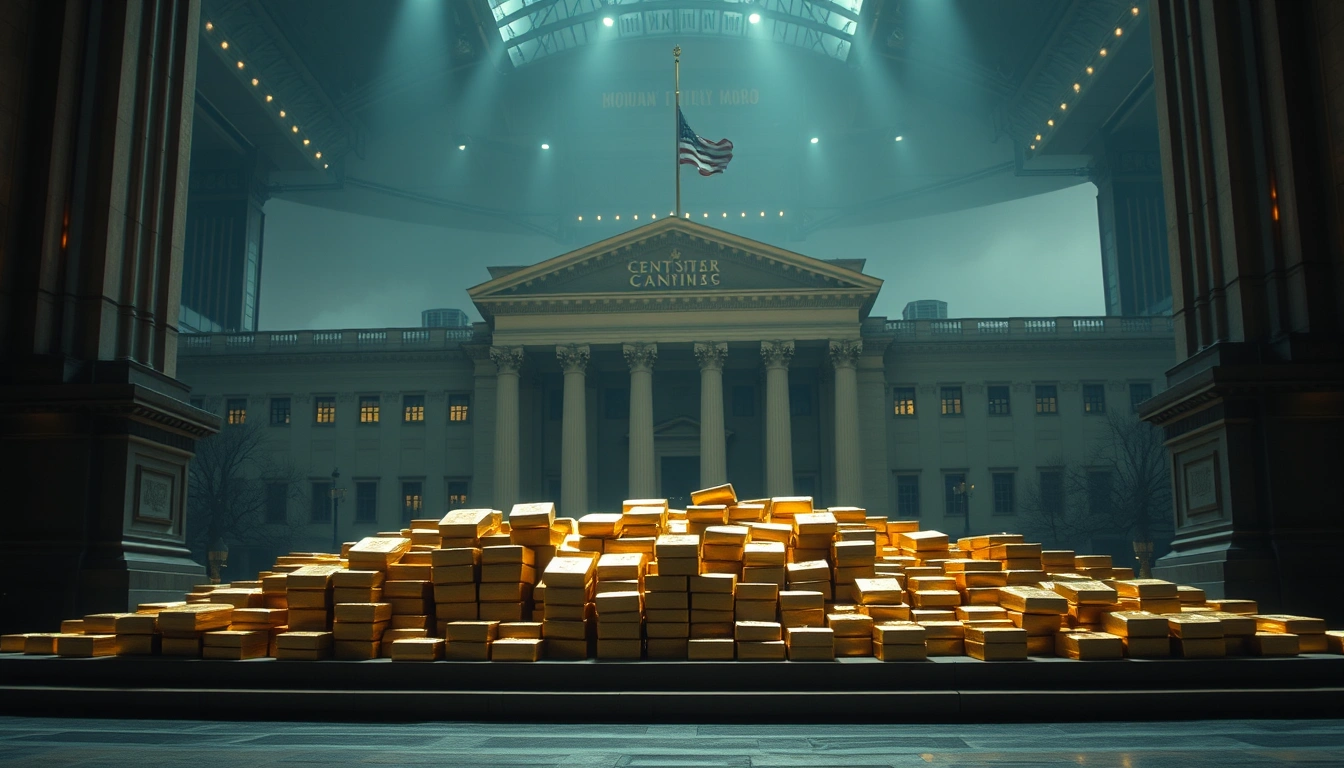
Gold's rally is set to continue as central bank demand provides a floor, but watch for potential profit-taking and dollar stabilization.
Gold miners (GDX) and physical gold ETFs (GLD) benefit as central bank buying tightens supply and supports prices above $3,800.
The U.S. dollar could strengthen if the Fed signals a less dovish stance, pressuring gold and emerging market currencies.
📄 Read Full Dispatch Intelligence Report (expand)
- What Happened: Central banks purchased a record 1,200 tonnes of gold in 2026, with China, Russia, and India accounting for 60% of the buying, as gold prices hit $3,850/oz.
- Hidden Mechanism: This buying is being driven by a desire to reduce reliance on the U.S. dollar and hedge against geopolitical risks, with central banks now holding 15% of their reserves in gold, up from 10% in 2020.
- Capital Transmission: Liquidity is rotating from dollar-denominated assets into gold and other hard assets, supporting gold miners and commodity currencies like the Australian dollar and South African rand.
The De-Dollarization Drive: Why Central Banks Are Stockpiling Gold
Central banks are on track to buy 1,200 tonnes of gold in 2026, the highest annual total since 1971 when Nixon ended the gold standard. This surge is not just about hedging inflation; it's a strategic move to reduce exposure to the U.S. dollar and the global financial system dominated by Western institutions. China, for instance, has increased its gold reserves for 24 consecutive months, adding over 300 tonnes in 2026 alone, according to IMF data. Russia, facing sanctions, has also accelerated purchases, while India and Turkey continue to diversify away from the dollar.
The catalyst? Geopolitical fragmentation and the weaponization of the dollar. The freezing of Russia's foreign exchange reserves in 2022 sent a chill through emerging market central banks, prompting a reevaluation of reserve safety. As a result, gold is being reclassified from a commodity to a strategic asset. In plain English: central banks are swapping paper dollars for shiny metal because they fear the dollar might not always be reliable.
The Price Mechanism: How Central Bank Buying Lifts Gold Prices
Central bank demand has absorbed a significant portion of global gold supply. According to the World Gold Council, central banks now account for 25% of annual gold demand, up from 10% a decade ago. This steady buying has created a floor under prices, even as ETF outflows and rising real yields have pressured gold in previous years. In 2026, gold has rallied 32% year-to-date to $3,850/oz, with central bank purchases contributing to a 15% supply deficit in the physical market.
But here's the catch: central banks are price-insensitive buyers. They buy regardless of short-term fluctuations, which can lead to a supply squeeze. The London Bullion Market Association reports that gold inventories in London vaults have declined by 20% since 2024, indicating a tightening physical market. This means that any increase in investment demand could send prices parabolic.
Gold Price Today in the USA and India: Local Dynamics
Gold price today in the USA stands at $3,850/oz, up 1.2% on the day, as the dollar index (DXY) slipped 0.3% to 104.2. In India, the world's second-largest gold consumer, prices hit ₹78,000 per 10 grams (approximately $3,900/oz), driven by festival demand and central bank buying. The Reserve Bank of India added 50 tonnes in 2026, boosting its reserves to 800 tonnes. For Indian investors, gold remains a hedge against rupee depreciation, which has fallen 5% against the dollar this year.
Positioning & Liquidity Map: Who Is Trapped?
The biggest losers are dollar bulls and gold shorts. Hedge funds have been net short gold for most of 2026, expecting a hawkish Fed to strengthen the dollar. But central bank demand has overwhelmed speculative selling, forcing shorts to cover. According to CFTC data, net short positions in gold futures have been reduced by 40% since January, but still stand at 150,000 contracts. If gold breaks above $3,900, a short squeeze could accelerate.
On the other side, gold miners are underowned. The NYSE Arca Gold Miners Index (GDM) is up 45% this year, but fund flows into gold mining ETFs remain negative, suggesting investors are skeptical. This divergence could lead to a catch-up rally if gold prices hold above $3,800.
Forward Scenarios & Probability Matrix
| Scenario | Implied Probability | Key Trigger / Level | Expected Asset Reaction |
|---|---|---|---|
| Base Case | 55% | Gold holds above $3,700, central bank buying continues | Gold tests $4,000 by Q1 2027, miners outperform |
| Bullish Tail | 25% | Dollar breaks below 100, geopolitical crisis | Gold spikes to $4,500, silver rallies to $35 |
| Bearish Stress | 20% | Fed hikes rates, dollar rallies above 108 | Gold falls to $3,300, miners drop 20% |
Dorian Reed
Computational Econometrician. Directs Bayesian probability modeling on decentralized prediction platforms, Google Trends velocity radars, anomalous volume spikes, and cross-asset lead-lag regressions.