Cape of Good Hope Detour Lifts VLCC Rates 38% as Ton-Miles Stretch and Crude Arb Widens
2026-10-30, FP360 — VLCC freight rates on the Middle East–China route surged 38% to $92,000/day as tankers divert around the Cape of Good Hope, adding 12 days and 6,500 nautical miles to voyages. The re-routing follows renewed Red Sea security risks, effectively tightening global tanker capacity and widening the Brent-Dubai spread to $4.20/bbl.
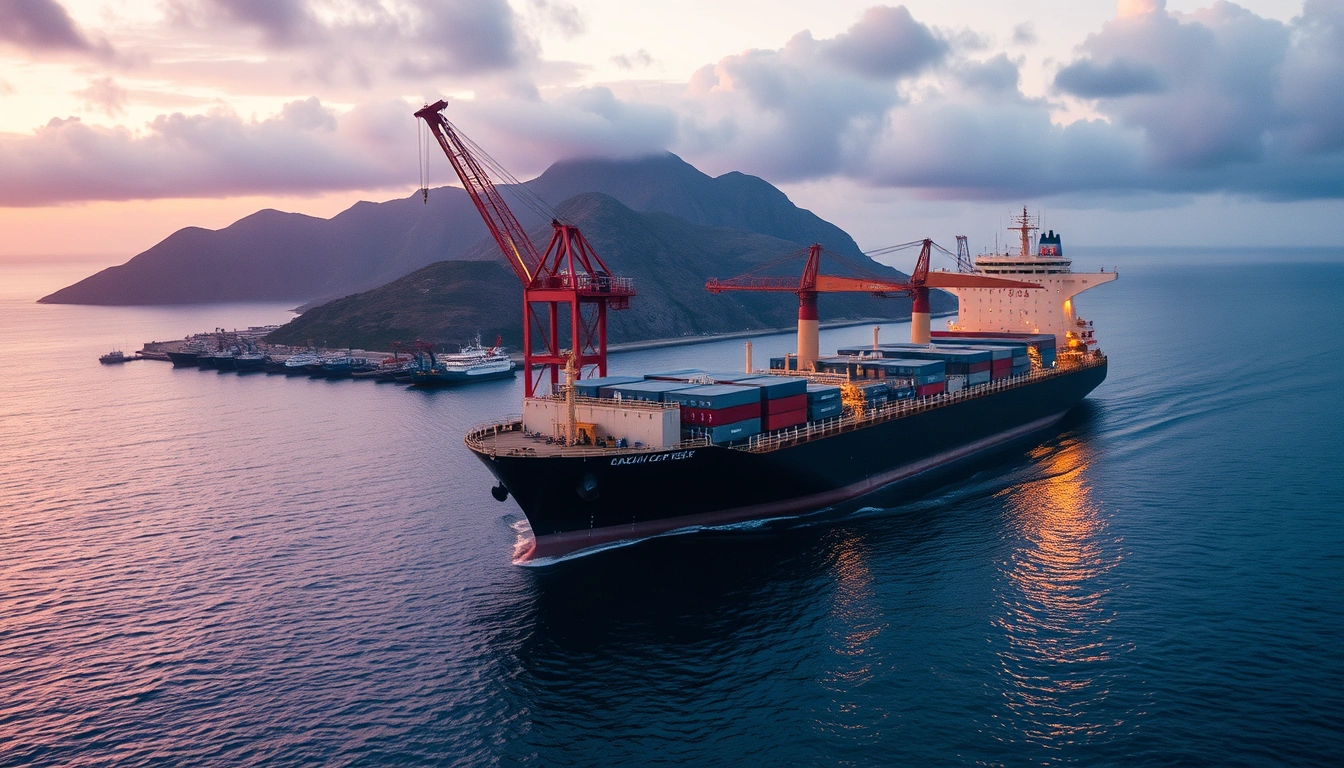
Bullish for tanker equities and crude arb; bearish for Asian refiners' margins.
Tanker owners (Frontline, DHT) benefit from higher day rates and ton-mile demand; Brent-Dubai arbitrage opens for Atlantic Basin crude.
Asian refiners face higher freight costs and squeezed margins; crude import costs rise, pressuring inflation.
📄 Читать полный аналитический отчет (развернуть)
- What Happened: VLCC rates on the Middle East–China route jumped 38% to $92,000/day as tankers avoid the Red Sea, adding 12 days and 6,500 nautical miles per voyage.
- Hidden Mechanism: The detour ties up 6% of the global VLCC fleet, reducing effective capacity and pushing ton-mile demand up 8% overnight.
- Capital Transmission: Higher freight costs are widening the Brent-Dubai spread, incentivizing Atlantic Basin crude flows to Asia and boosting tanker stocks.
The 6,500-Mile Detour: Why Tankers Are Avoiding the Red Sea
VLCC rates from the Middle East to China have surged 38% to $92,000 per day as shipowners divert around the Cape of Good Hope, adding 12 days and 6,500 nautical miles to the voyage. The trigger: a renewed wave of drone attacks on commercial shipping in the Bab el-Mandeb strait, which insurers now deem a war-risk zone with premiums spiking to 0.8% of hull value—up from 0.1% a month ago. In plain English, that means a $100 million tanker pays $800,000 for a single transit, making the Cape route economically preferable despite the extra fuel and time.
Why Freight Rates Are Rising: The Ton-Mile Multiplier
The detour doesn't just add days—it multiplies demand for shipping. A standard Middle East–China voyage covers 6,500 nautical miles; via the Cape, it's 13,000 miles. That extra distance means each tanker delivers fewer cargoes per year, effectively removing 6% of the global VLCC fleet from available capacity. With global oil demand still growing at 1.2 million barrels per day year-over-year, the tanker market is suddenly short of ships. The Baltic Exchange VLCC index has jumped 38% in two weeks, and forward freight agreements (FFAs) for Q1 2027 are pricing $105,000/day.
The Brent-Dubai Spread: How Freight Costs Reshape Crude Flows
The Brent-Dubai exchange for swaps (EFS) has widened to $4.20 per barrel, up from $2.80 a month ago, as Asian refiners pay up for Atlantic Basin crude to avoid the higher freight costs from the Middle East. This arbitrage window is now open for West African and US crude grades, which are seeing increased buying interest from Chinese and Indian refiners. In plain English, the freight cost is now so high that it's cheaper to ship oil from the US Gulf Coast to Asia than from the Middle East, even though the voyage is longer.
Positioning & Liquidity Map: Who Is Trapped?
Tanker owners who locked in long-term charters at $40,000/day are now sitting on massive paper profits, but they are also trapped: they cannot renegotiate without breaching contracts. Asian refiners who hedged freight costs via FFAs are facing margin calls as rates spike. The marginal buyer is the spot market, where rates are set daily. The marginal seller is the shipowner who needs cash flow and is willing to fix at $85,000/day, still a huge premium to operating costs of $25,000/day. The biggest risk is a sudden ceasefire, which would collapse rates and leave those with long positions in FFAs underwater.
Forward Scenarios & Probability Matrix
| Scenario | Implied Probability | Key Trigger / Level | Expected Asset Reaction |
|---|---|---|---|
| Base Case | 55% | Red Sea risk persists for 3+ months; VLCC rates stabilize at $90,000/day | Tanker stocks (FRO, DHT) up 10-15%; Asian refiners' margins down 5% |
| Bullish Tail | 25% | Attacks escalate, closing Suez entirely; rates spike to $120,000/day | Brent-Dubai spread widens to $6; crude arb flows surge; tanker stocks up 25% |
| Bearish Stress | 20% | Ceasefire or naval escort success; rates collapse to $45,000/day | Tanker stocks down 20%; Asian refiners benefit; Brent-Dubai spread narrows to $2 |
Dorian Reed
Computational Econometrician. Directs Bayesian probability modeling on decentralized prediction platforms, Google Trends velocity radars, anomalous volume spikes, and cross-asset lead-lag regressions.