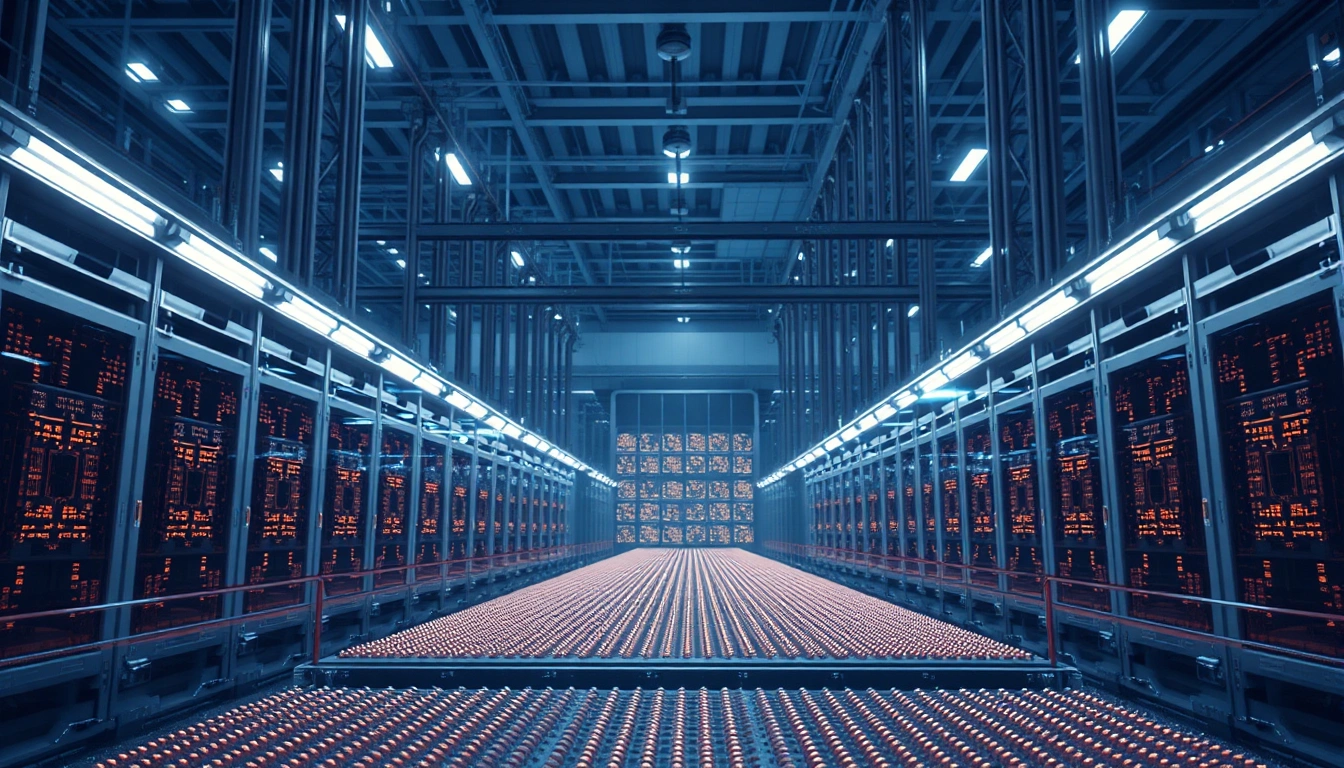
- What Happened: Advanced packaging lead times have reached 52 weeks, with HBM3E memory allocations sold out through 2027, creating a hard physical ceiling on AI accelerator production despite surging demand.
- Hidden Mechanism: The bottleneck isn't chip design—it's the complex CoWoS packaging and HBM stacking processes that require specialized equipment and cleanroom space, both of which are in critically short supply.
- Capital Transmission: Investment is flooding into packaging and memory capex, but the lag between spending and production means the scarcity premium persists, benefiting incumbents and equipment makers while squeezing smaller AI chip hopefuls.
The Physical Bottleneck: Why AI Accelerators Can't Be Built Fast Enough
The AI boom has a dirty secret: making the chips is the easy part. Advanced packaging—specifically TSMC's CoWoS (Chip-on-Wafer-on-Substrate) technology—and high-bandwidth memory (HBM) are the real constraints. Current lead times for advanced packaging are 52 weeks, meaning a chip designed today won't be packaged until late 2027. HBM3E, the latest memory standard, is sold out through 2027, with SK Hynix and Samsung allocating output to a handful of privileged customers. This isn't a temporary glitch; it's a structural chokepoint that will define the AI hardware landscape for years.
Why the Stock Market Is Up and Down: The AI Trade Meets the Yield Curve
Today's market action reflects a tug-of-war between AI optimism and macro headwinds. The S&P 500 sits at 7,237, but beneath the surface, AI hardware stocks are volatile. The 10-year Treasury yield at 4.92% compresses the equity risk premium, making long-duration growth stocks less attractive. Yet, the physical scarcity of AI components provides a fundamental floor. Investors are asking: "Why is the stock market up today?" The answer: selective strength in companies with tangible AI exposure—like TSMC and SK Hynix—offsetting weakness in rate-sensitive sectors.
The HBM Gold Rush: Who Wins and Who Waits
HBM is the new oil. SK Hynix controls about 50% of the HBM market, with Samsung and Micron battling for share. The allocation squeeze means hyperscalers like Nvidia, AMD, and Google are locking in supply years in advance. Smaller AI chip startups are left out in the cold. This is a classic oligopoly: the incumbents have pricing power and can expand margins. But it's also a risky bet—if AI demand slows, the capex pouring into HBM fabs could create a glut. For now, the market is pricing in perfection.
The bottleneck isn't just about capacity; it's about yield. Advanced packaging and HBM stacking have notoriously low yields, meaning even when capacity is added, the effective output may be lower than expected. This hidden inefficiency is a bullish tailwind for equipment suppliers who provide yield-enhancement tools, and a bearish risk for anyone assuming a linear capacity ramp.
Positioning & Liquidity Map: Who Is Trapped?
Shorts in AI hardware names are trapped by the physical scarcity narrative—any positive earnings surprise or capacity expansion announcement triggers squeezes. Meanwhile, momentum longs are vulnerable to any sign of demand digestion. Options markets show elevated skew in TSMC and SK Hynix, with out-of-the-money calls in high demand. Liquidity is thinning in smaller AI chip stocks, where order books are shallow and prone to gaps. The marginal buyer is likely a long-term institutional investor rebalancing into hardware enablers, while forced sellers could emerge if yields spike above 5%.
Forward Scenarios & Probability Matrix
| Scenario | Implied Probability | Key Trigger / Level | Expected Asset Reaction |
|---|
| Base Case | 55% | Packaging lead times hold at 52 weeks; HBM allocations remain sold out through 2027 | TSMC and SK Hynix grind higher; equipment makers outperform |
| Bullish Tail | 25% | Major capacity expansion announcement or yield breakthrough | AI hardware sector rallies 10-15%; risk-on rotation into small caps |
| Bearish Stress | 20% | Hyperscaler capex cut or 10-year yield breaks 5.2% | AI hardware names de-rate 20-30%; flight to safety |